
Arthritis does not just hurt. It changes how ordinary tasks get done. Here is what actually helps with daily life, not only the pain itself.
Arthritis pain gets most of the attention, but the harder part is often what it takes away from an ordinary day. Opening a jar, buttoning a shirt, or standing up from a low chair can turn into a small ordeal. I have watched this happen to people close to me, and the changes that helped most were rarely about the pain itself. They were about removing the extra effort a stiff or sore joint adds to a simple task. Arthritis is common in later life: nearly half of US adults who have it are 65 or older, according to the Centers for Disease Control and Prevention.
Start with the hands
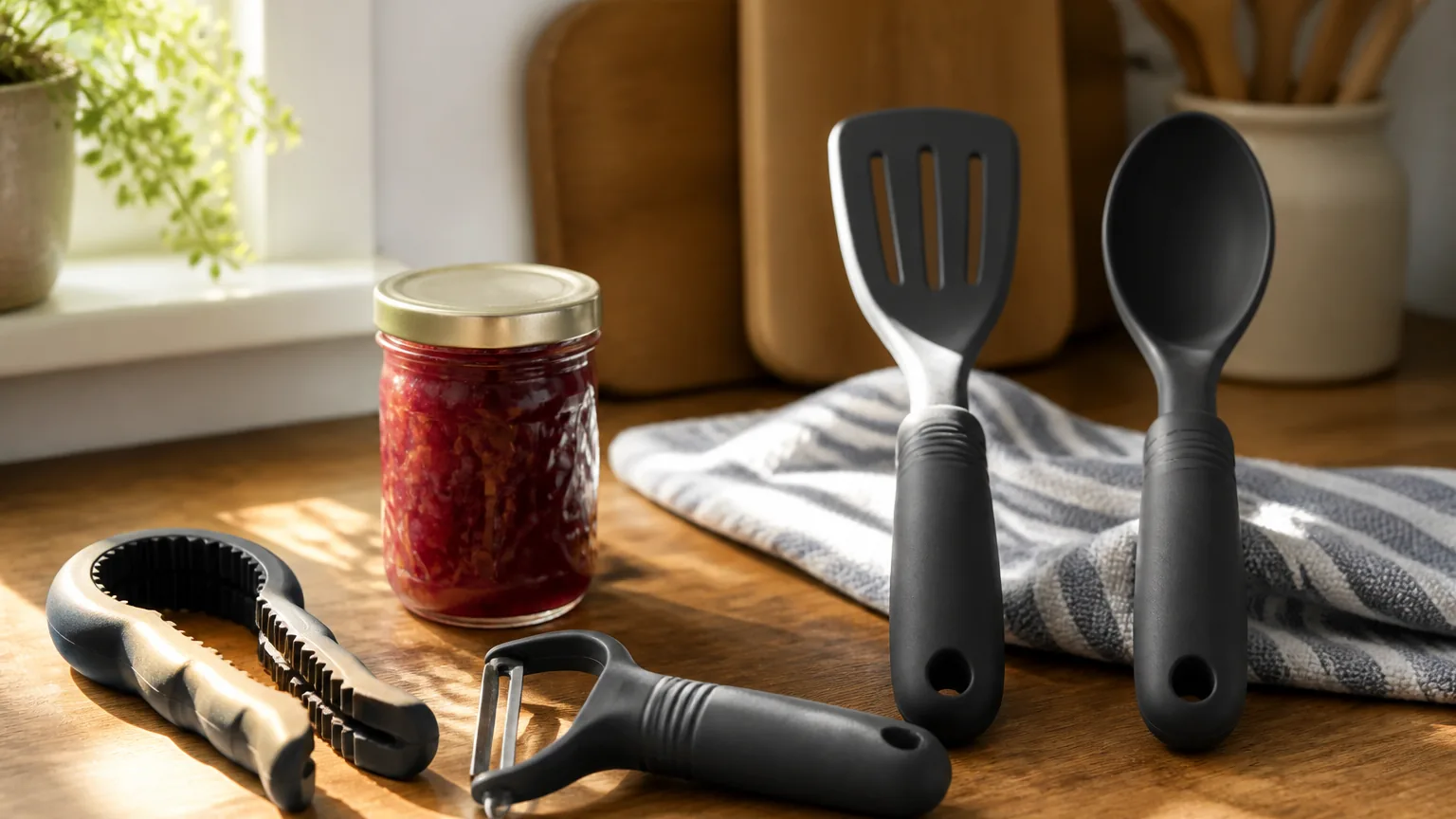
Most daily frustration with arthritis shows up in the hands first. A jar lid that will not turn, a key that will not grip, a zipper that will not pull. Wide, soft grips solve a surprising number of these problems at once. A kitchen with wide-handled utensils, a jar opener, and a few grip aids by the door removes many small daily struggles without changing a single routine. The age-proof your kitchen article covers the rest of that room.
Fix the furniture before the routine
Standing up from a low chair or a soft sofa uses the same joints that arthritis targets most: the hips and knees. A firmer cushion, a slightly higher chair, or an added seat riser often makes standing up noticeably easier, especially on a difficult day. The same is true of the bed. A bed that sits a little higher, or a sturdy bed rail to push against, removes one of the hardest transitions in a person's day. Anyone setting a room up around a recovery can find the same moves in the recovery-ready bedroom article.

The bathroom deserves its own look
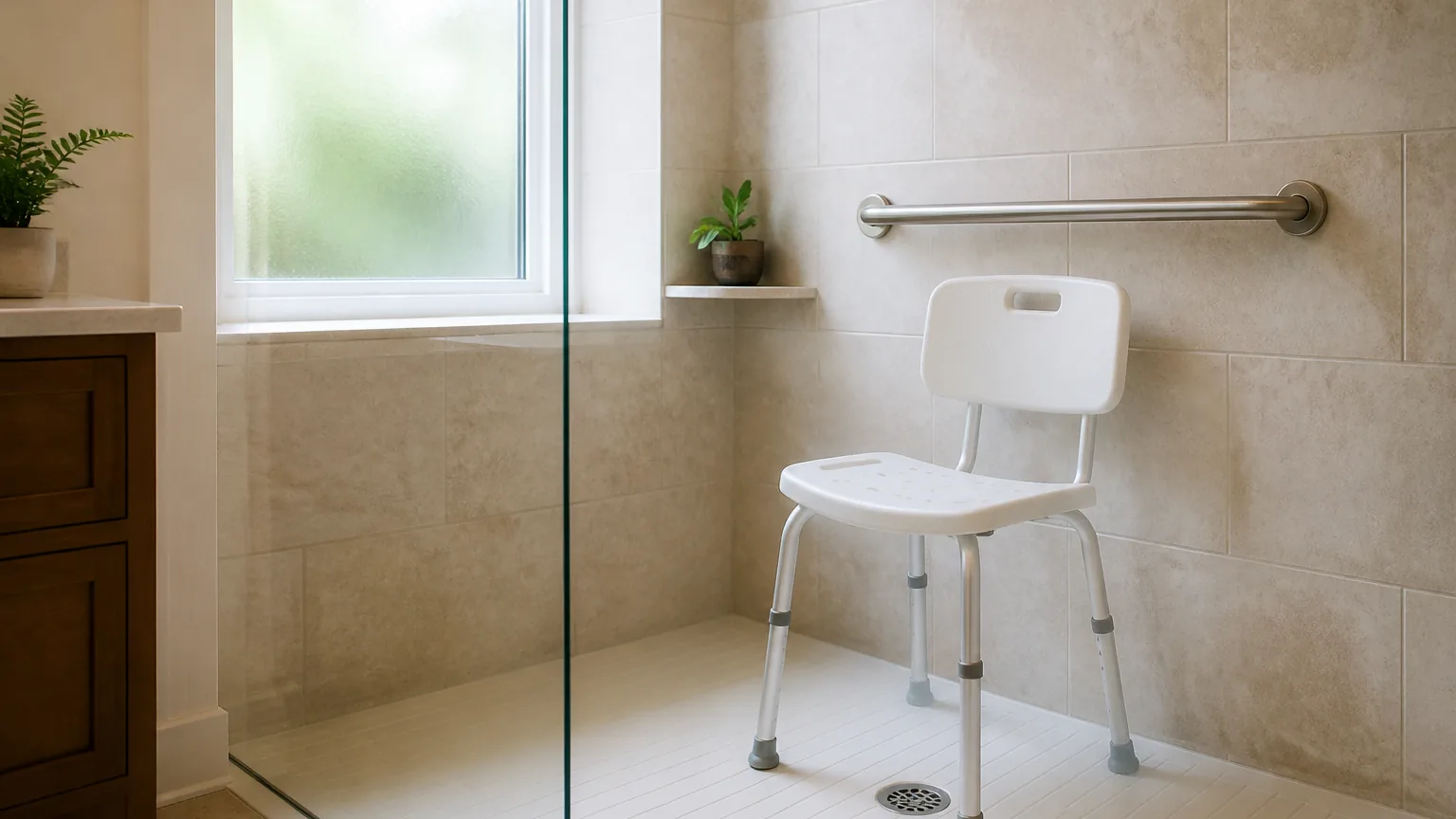
Getting in and out of a bathtub asks a lot from sore joints. So does standing at a sink to brush teeth, with nothing steady to hold on to. A shower chair removes the need to stand through an entire shower. Grab bars, properly anchored into wall studs, give a joint-friendly place to push from instead of a slippery edge to grab in a hurry. The National Institute on Aging recommends mounting grab bars near the toilet and on both the inside and outside of the tub or shower, the same spots that ask the most of a sore joint. The weekend fall-proofing article covers the rest of the house the same way.
Heat, movement, and knowing when to rest
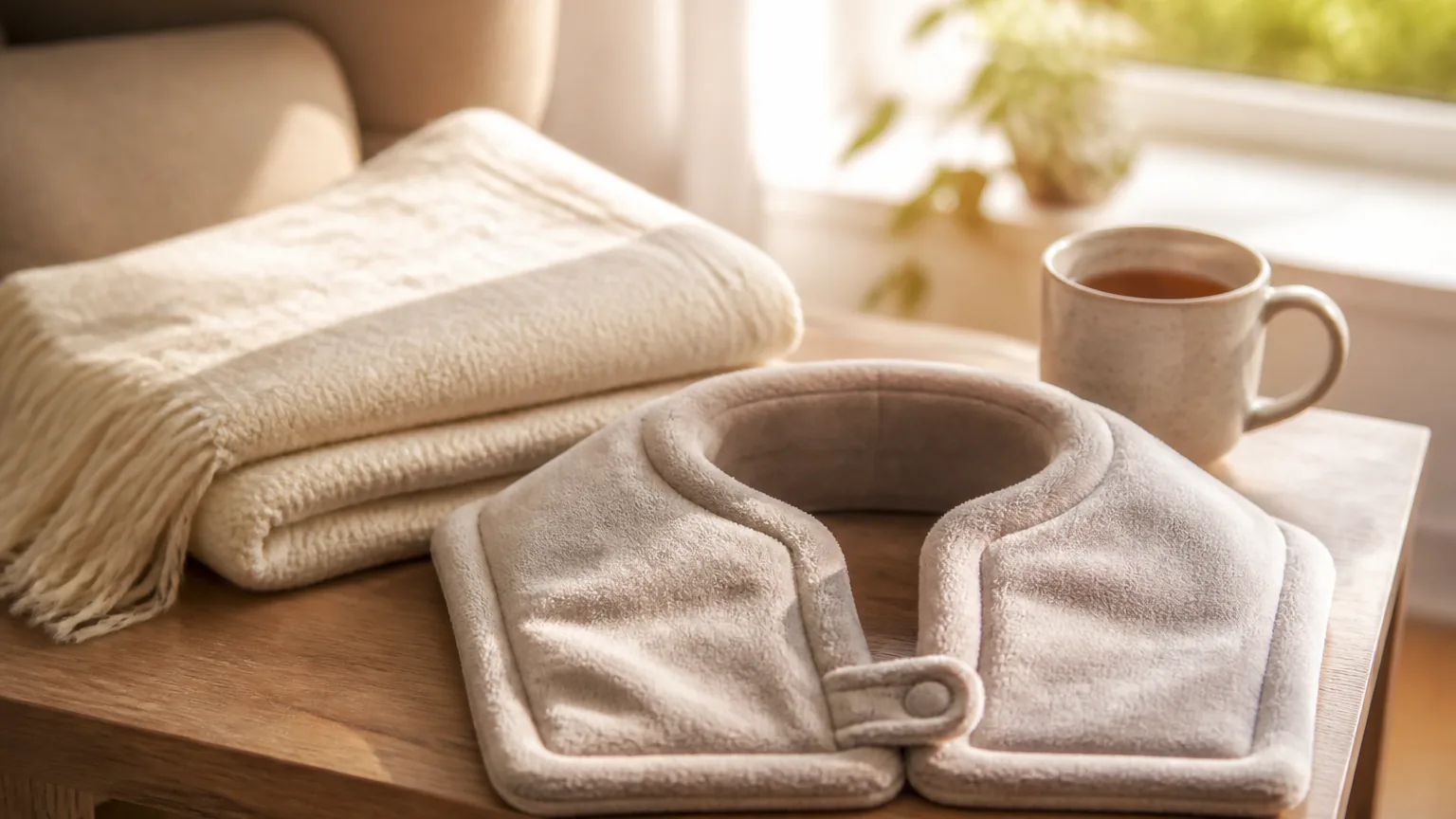
A warm compress or a heated wrap loosens a stiff joint before a task. That makes getting dressed or preparing a meal much easier. According to the Arthritis Foundation, gentle movement generally helps more than complete rest on an ordinary day. A real flare is different: that is a signal to slow down rather than push through. A doctor or physical therapist can help sort out which days call for movement and which call for rest. The answer changes from week to week.
Heat and cold do different jobs, and knowing which one to reach for takes the guesswork out of a sore morning.
| When | Heat (warm compress or wrap) | Cold (ice pack, wrapped in cloth) |
|---|---|---|
| Best for | A stiff joint before a task | A joint that is swollen, hot, or actively flared |
| What it does | Loosens the joint and eases stiffness | Calms swelling and dulls a sharp ache |
| When to use it | Before activity, like getting dressed or cooking | After activity, or during a flare |
| Skip it when | The joint is already hot or swollen | The skin is numb or circulation is poor |
Small changes, not a renovation
None of this requires remodeling a home. A handful of grip aids, one better chair, a shower chair, and a couple of grab bars address much of what makes daily life harder with arthritis. The goal is not to eliminate every difficulty. It is to remove enough of the small, avoidable effort that joints that already hurt are not also fighting the furniture.
If it helps to start somewhere, this is a sensible order:
- Add a few wide grips for the hands: utensils, a jar opener, and a key turner. These fix the most frequent daily struggles for the least money.
- Make one chair and the bed easier to get out of, with a firmer or higher seat. If you are thinking about a bed rail, ask a doctor or occupational therapist first, because adult portable bed rails carry an entrapment risk.
- Set up the bathroom next, since it carries the highest fall risk: a shower chair and a pair of properly anchored grab bars.
- Keep a warm wrap within reach for stiff mornings, and use it before a task rather than after.
Many of the products that help most with arthritis double as thoughtful gifts, since a family member often notices the need before the person asks for help. The gifts for seniors with arthritis guide on this site has specific picks built around exactly this problem.
Key Takeaways
- Most daily arthritis trouble starts in the hands, and wide, soft grips fix many problems at once.
- A firmer or higher chair, and a slightly higher bed, often make standing up noticeably easier.
- A shower chair and properly anchored grab bars address the bathroom, one of the hardest rooms for sore joints.
- Gentle movement generally helps more than complete rest on an ordinary day, though a real flare is a signal to slow down.