
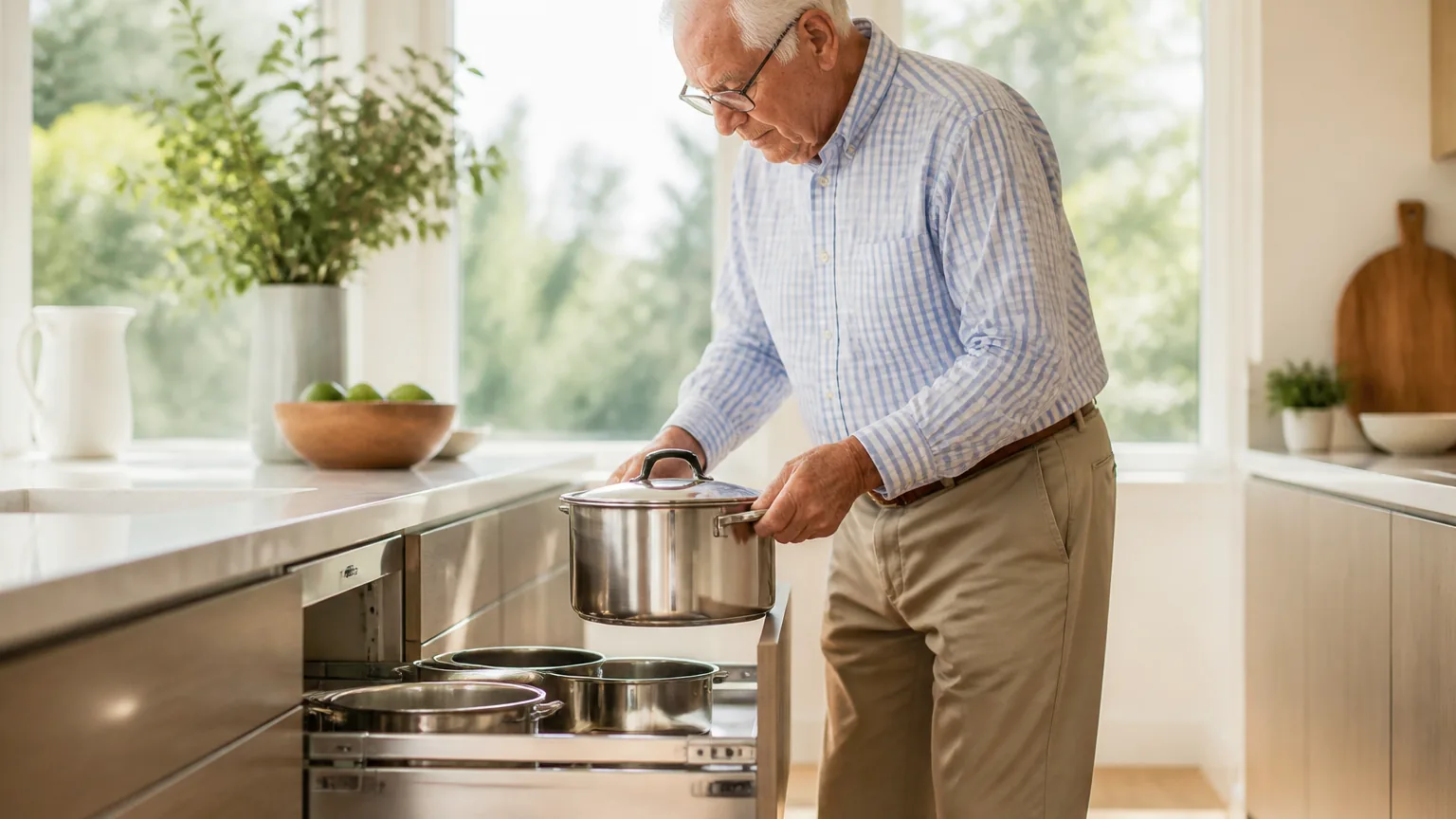
The kitchen is where independence is quietly won or lost — and most of what makes it safer is cheap, reversible, and takes an afternoon. Here is what actually helps, in the order that matters.
The kitchen is where staying independent is quietly won or lost. It is the room an older adult uses most, and the one where a small problem turns into a fall or a burn the fastest. I am seventy myself, so I write this from inside the question, not above it.
The good news is that most of what makes a kitchen safer is cheap and reversible. You do not need to remodel. You need to fix a few specific things, in the right order. Here is what actually helps.
At a glance
- Fix the floor first — loose rugs, spills, and slick surfaces cause the most falls.
- Move everyday items into the zone between your knees and your shoulders.
- Small tools — a jar opener, a touchless faucet, lever handles — replace grip that fades with age.
- Bright light and an induction cooktop cut the risk of cuts and burns.
Start with the floor
Falls are the biggest risk in any kitchen, and the floor is where most of them begin. Each year, millions of older adults fall, and a great many of those falls happen at home. The CDC treats home hazards as one of the causes you can actually change.
Start with what is underfoot:
- Remove loose rugs, or tape them down. A rug that slides is the most common trap in the room.
- Wipe spills the moment they happen. Water and oil on tile are invisible until you are down.
- Add grip to a slick floor. A one-coat anti-slip floor coating raises traction without a new floor.
Good shoes help too. Bare feet and loose slippers give you nothing to grip with. A firm sole and a closed back are worth more here than they look.
Bring everything down to counter height
Reaching high and bending low are the next two risks. A step stool near a hot stove is an accident waiting to happen. So is kneeling to dig through a deep, dark cabinet.
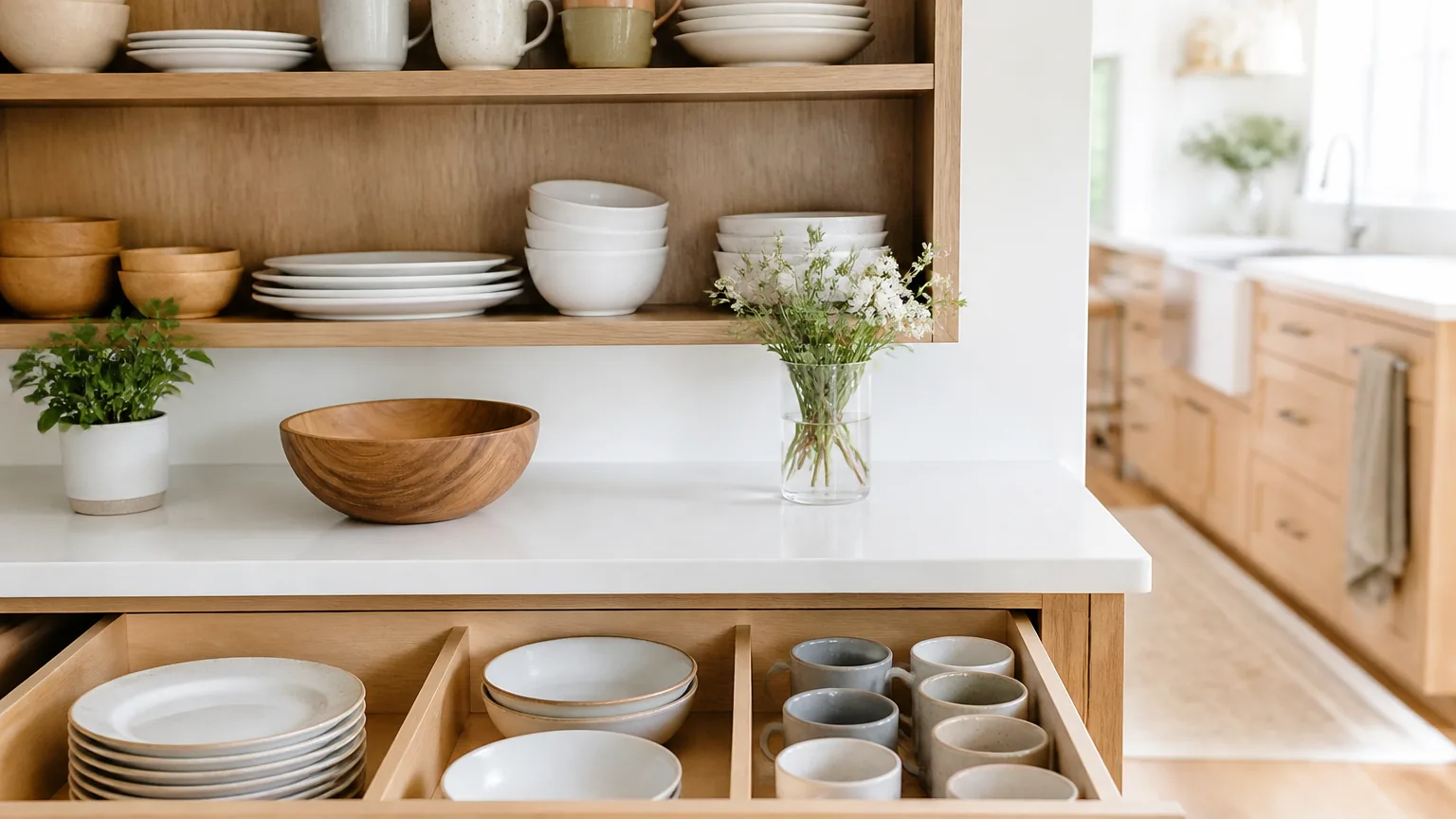
The fix is to move daily items into the zone between your knees and your shoulders. Pull-out cabinet shelves bring the back of a cabinet out to you, so nothing hides where you cannot see it. Keep the pans, plates, and foods you use every day on the counter or one shelf up. Save the high shelves for the things you touch twice a year.
Make the taps and openers work for weak hands
Grip fades with age, and arthritis makes it worse. A jar that will not open is not just annoying. It is a reason people quietly stop cooking fresh food at all.
A few small tools give that grip back:
- A touchless faucet turns on with a wave, so there is no stiff handle to twist with wet, sore hands.
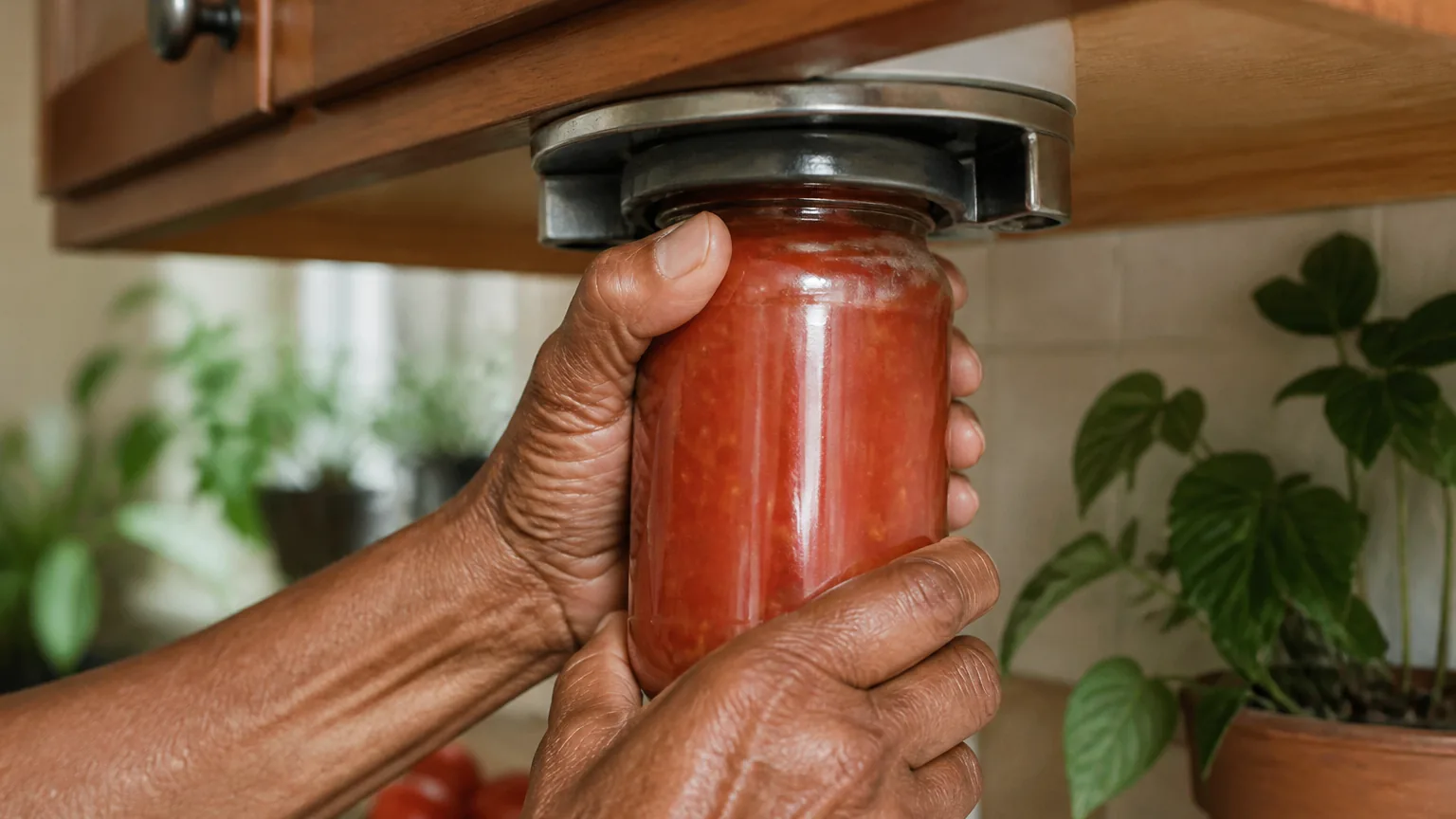
- An under-cabinet jar opener grips the lid so you turn the jar, not your wrist.
- A one-button electric can opener opens a can hands-free and leaves a smooth edge.
- Lever handles on doors and cabinets open with a push or a closed fist, with no grip needed.
Fix the light and the flame
Vision changes with age. An older eye needs far more light than a young one to see the same thing. Dim counters lead to cuts, and a missed flame leads to worse.
Add bright, even light over the sink, the stove, and every spot where you cut or chop. Under-cabinet strips are easy to fit and make a real difference. Aim for light that falls on the work, not just on the ceiling.
The stove itself deserves attention. Cooking is the leading cause of home fires, and an unattended pan is the usual reason. If a parent forgets the stove, look at a range with an automatic shut-off, or an induction cooktop, which stays cool to the touch and heats only the pan. The National Institute on Aging lists changes like these among the ones that keep people at home safely.
Hot, heavy pans are their own hazard, and one people rarely plan for. Lifting a full pot of boiling water to drain it is where many burns and drops happen. There are simpler ways. Use a pot with two handles instead of one. Scoop pasta out with a strainer and leave the water to cool. Or fit a kettle tipper so a heavy kettle pours without being lifted at all. The rule is the same throughout the kitchen: slide the weight, do not carry it.
Tools that make cooking possible again
Some tools do more than add safety. They put a task back within reach. When one hand weakens, or a tremor makes a knife feel dangerous, the right tool is the difference between cooking and giving up.
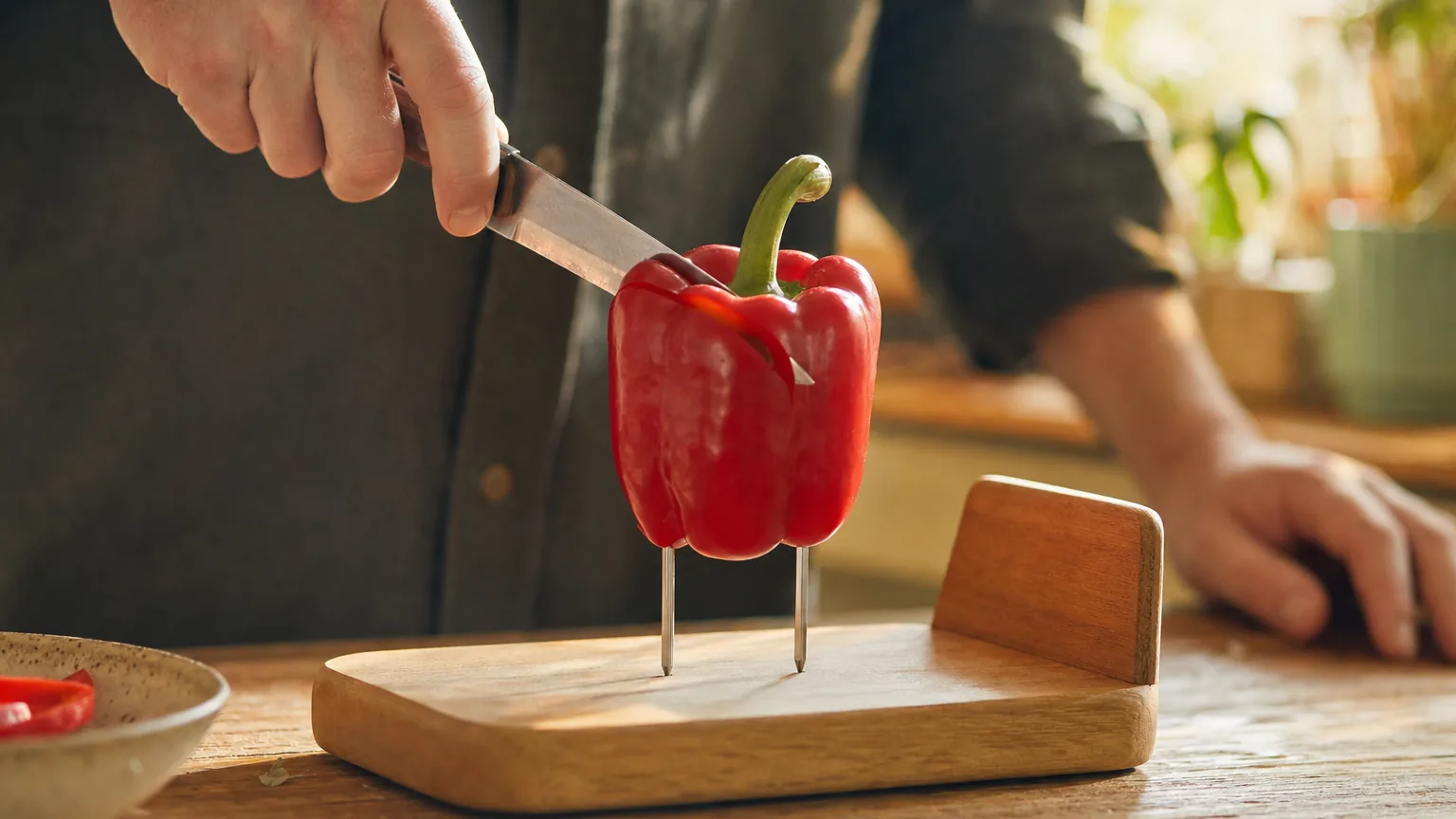
A one-handed cutting board holds food still with spikes and a corner guard, so a single hand can slice safely. Weighted, wide-grip utensils steady a shaking hand at the table. And the OXO Good Grips line builds the same fat, soft handle into peelers, spoons, and openers you already use. Many of these overlap with our gifts for seniors with arthritis, if you are shopping for someone else.
Give them a place to sit
Standing to cook is tiring, and a tired body is a body that falls. A sturdy stool at the counter lets a person prep sitting down, and rest without leaving the task. Choose one with a wide base and a back, not a wobbly bar stool. Even a short sit between steps keeps the legs steadier for the rest of the meal.
Where to start
You do not have to do all of this at once, and you should not try. Fix the floor first, because falls carry the highest cost. Then add light. Then work through the grip and reach problems one tool at a time, as they come up.
If you are helping a parent, do it with them, not for them. A change made behind their back feels like a loss of control. A change made together feels like staying in charge. That feeling is worth as much as the safety itself.
| Trouble spot | The fix |
|---|---|
| A slippery floor | Non-slip mats or an anti-slip coating |
| High shelves | Move daily items down to counter height |
| Stiff taps and jar lids | Lever taps and wide-grip openers |
| Dim light or a gas flame | Brighter task lighting, or an induction cooktop |
| No place to rest | A stool or perch seat at the counter |
If it helps to start somewhere, take it in this order:
- Fix the floor first, since a fall there undoes everything else.
- Bring daily items down to counter height, so nothing needs a reach or a step stool.
- Swap stiff taps and openers for lever and wide-grip versions.
- Improve the light, and add a place to sit while cooking.
- Make each change together with the person, not behind their back.