
Most home falls are preventable. A focused weekend of changes can make a senior's home significantly safer — without a major renovation.
Falls in the home are not random events. The vast majority involve an identifiable hazard. A slippery floor, a poorly lit staircase, a rug that slipped, a bathroom with nothing to hold on to. That hazard combines with a physical factor, like reduced balance or a medication side effect. Remove the hazard, and the fall often doesn't happen.
Falls are common: the Centers for Disease Control and Prevention reports that more than one in four older adults falls each year. The encouraging part is how much of that risk is fixable.
The good news is that most home fall prevention doesn't require a major renovation or significant expense. According to the CDC, environmental modifications are among the most evidence-backed approaches to reducing fall risk in older adults. A thoughtful weekend with the right supplies can address the majority of the highest-risk areas in almost any home.
The bathroom: the highest-priority area
The bathroom is widely considered the single most dangerous room in the house for older adults. Wet, hard surfaces combine with the physical demands of getting in and out of a bath or shower to create the conditions for serious falls.
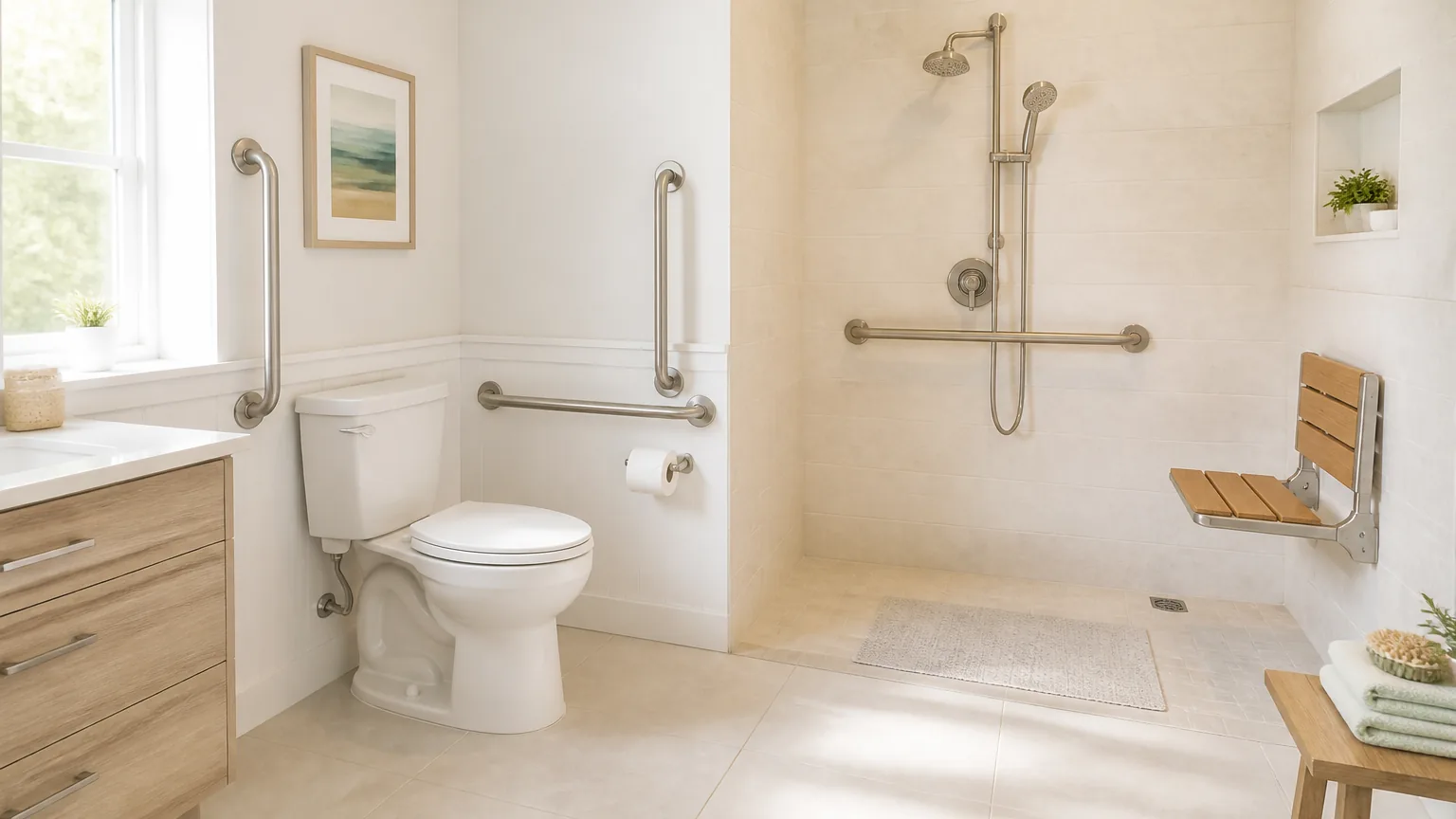
Among the modifications most consistently recommended by fall prevention specialists are grab bars in the shower or bath, a non-slip mat on the shower or bath floor, and a shower seat or bench. Proper anchoring of grab bars to wall studs, rather than tiles or drywall alone, is essential. A bar that pulls away under pressure provides no real protection, and can cause injury. Professional installation is often preferable if there's any uncertainty about the anchoring.
A raised toilet seat or safety frame around the toilet is a commonly recommended modification for anyone with limited strength or mobility. A small non-slip bathmat outside the shower or bath helps too. Secure it to the floor, not loose. It handles the hazard of stepping out onto wet flooring.
Stairs
Stairs account for a significant proportion of serious fall injuries. Among the key factors are handrails and lighting.
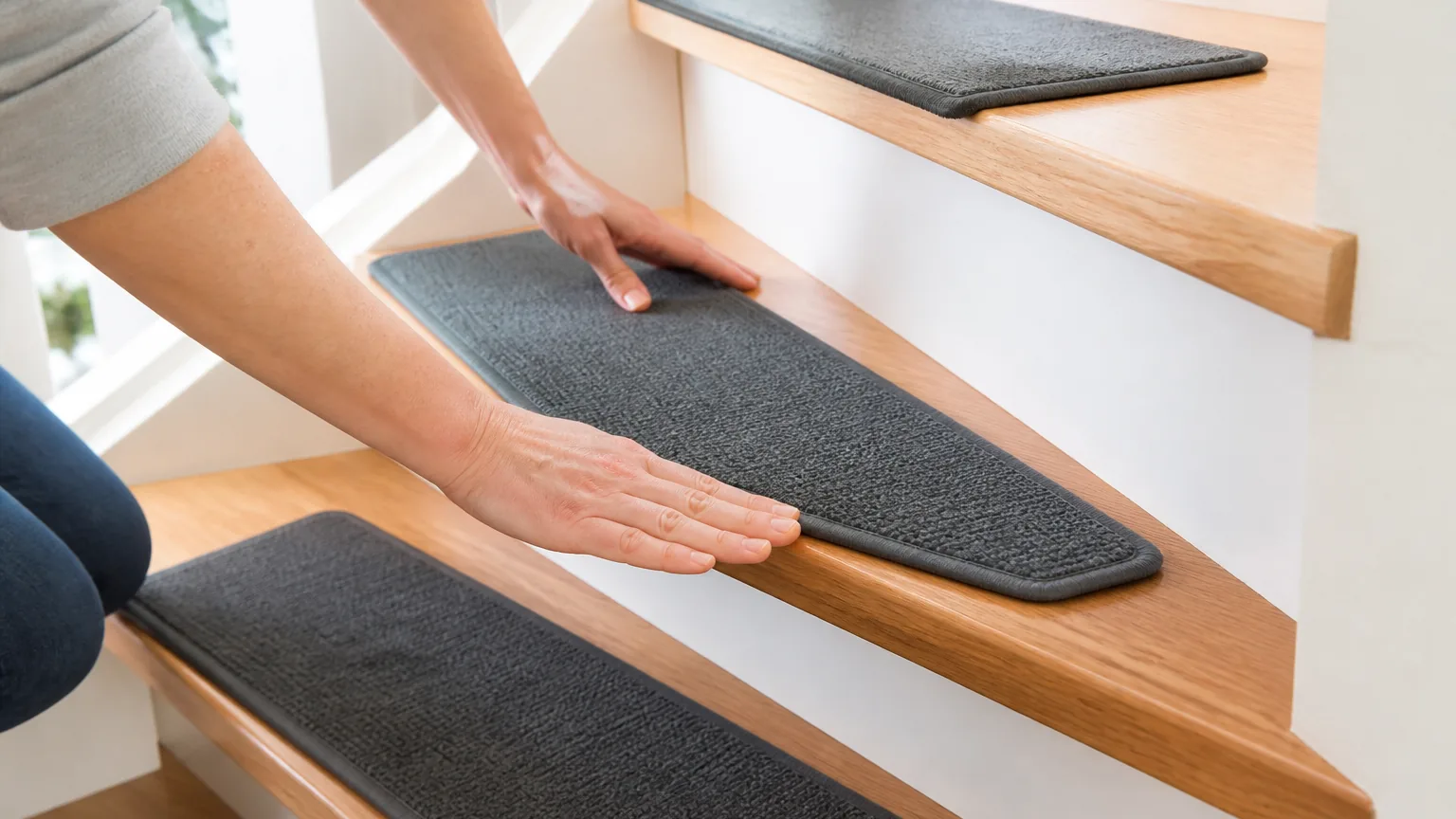
Standard guidance calls for handrails running the full length of stairs on at least one side — ideally both — firmly anchored. A rail that wobbles provides no real support. Non-slip stair treads — either adhesive strips or full tread covers — are a widely recommended addition to wooden or tile stairs. Carpeting that is lifting or loose at any edge is a well-documented hazard worth addressing.
Lighting at the top and bottom of stairs matters as much as any physical fix. So does a clearly reachable light switch at both ends. Motion-sensor stair lights are particularly useful for night-time trips.
Living areas and hallways
Loose rugs are among the most common hazards in living areas. Fall prevention guidance consistently identifies unsecured rugs — those that can slip or have edges that curl — as a significant risk. Securing them with non-slip underlays and double-sided tape, or removing them, are the approaches most often recommended. This applies particularly to small rugs in high- traffic areas.
A deliberate walk-through with attention to pathways often reveals obstacles that have become invisible through familiarity. Furniture arrangements that seem natural can create obstacles for someone whose gait has changed. Clear pathways of at least three feet in width in frequently used routes are a standard recommendation. Low coffee tables, footstools, and similar items at ankle or shin height in main walkways are well-documented trip hazards.
Extension cords crossing floors are a recognized hazard; securing them against baseboards or rerouting is the typical recommendation. Cluttered floors — shoes, bags, boxes — in main walkways are worth addressing.
Lighting throughout the home
Older eyes need significantly more light than younger eyes to see clearly. A lighting level that seems adequate to a visiting adult child may be genuinely dim to their parent. Walking through the home at night can reveal which areas are darker than they appear in daytime.
Night lights in hallways — particularly between the bedroom and bathroom — make night-time trips significantly safer. Motion-activated lights are especially practical because they require no fumbling for a switch. A bedside lamp within easy reach, or a motion-sensor light beside the bed, is another widely recommended modification.
The kitchen
In the kitchen, the main hazards are items stored at height (requiring stretching or climbing), wet floors, and reaching across hot surfaces. Reorganizing storage so that frequently used items sit between waist and shoulder height eliminates the need for reaching up or bending down — common sources of balance loss in older adults. For the occasional reach to higher shelves, a step stool with a handrail is generally considered preferable to a standard stepladder.
Anti-fatigue mats in front of the sink and stove add comfort on hard floors. A non-slip backing keeps them in place.
Outdoor areas
Secure handrails at entry steps, and even, clear pathways and driveways, are standard fall prevention recommendations. Moss or algae on outdoor surfaces becomes a significant slip hazard when wet. Good outdoor lighting is as important as the surface itself. That includes a light that comes on before someone steps outside at night.
A weekend of focused attention to these areas won't eliminate all risk. But it will remove the most common hazards. And it will make the home meaningfully safer, which is usually exactly what's needed.
| Room | The priority fix |
|---|---|
| Bathroom | Grab bars by the toilet and tub, and a non-slip mat |
| Stairs | Secure handrails on both sides, and marked edges |
| Halls and living areas | Loose rugs and clutter cleared from every path |
| Lighting | Night lights on the route from bed to bathroom |
| Kitchen | Daily items at waist height; spills wiped at once |
| Outdoors | Even steps, a handrail, and a lit entry |
Over a weekend, work in this order:
- Start in the bathroom, the highest-risk room: add grab bars and a non-slip mat.
- Secure handrails on every staircase, inside and out.
- Clear loose rugs and clutter from every walking path.
- Add night lights along the route from bed to bathroom.
- Finish outdoors: even out steps and light the entry.
Key Takeaways
- Most home falls trace to an identifiable hazard — a slippery floor, dark stairs, a loose rug, a grab-free bathroom — so removing hazards prevents many of them.
- The bathroom is the top priority: add a shower seat, a non-slip mat, and grab bars anchored to wall studs, not to tile alone.
- On stairs, run firmly anchored handrails the full length, add non-slip treads, and light both the top and the bottom.
- Clear the routes: secure or remove loose rugs, keep walkways at least three feet wide, and move cords out of the path.
- Older eyes need far more light, so add night lights between the bedroom and bathroom, ideally motion-activated.
Free printables: the fall-proofing home checklist, a room-by-room list to take around the house, and the weekend home-safety walkthrough for doing it over two days.