

The week after surgery is the wrong time to discover the bedroom is not set up for it. Here is what to change beforehand, room by room, while there is still time to do it calmly.
Recovering from surgery at seventy is not the same as recovering at forty. Balance is more fragile, energy comes back slower, and a bedroom that worked perfectly well before the operation can turn into an obstacle course afterward. Falls are the leading cause of injury for adults 65 and older, according to the Centers for Disease Control and Prevention, and the unsteady first days after surgery are exactly when that risk climbs. The families who handle this well almost always did the same thing. They set the room up before the surgery, not after. That gave them time to think it through calmly, instead of managing it from a hospital bed.
Start with the bed itself
Getting in and out of bed is the single most repeated motion of a recovery, and it is where the first fall risk usually shows up. A bed that sits too low forces a hard push up from a weak position; one that is too high makes the drop down unsteady. An adjustable bed solves the height problem directly. If that is not an option, a sturdy bed rail gives something firm to push against. That matters more in the first week than almost anything else in the room. Keep a stable nightstand within arm's reach, low enough to use without twisting or stretching.
Clear a straight, obstacle-free path
Walk the actual route from the bed to the bathroom before the surgery. Do it at night, with the lights off, the way it will really happen on a 3 a.m. trip. Loose rugs, an ottoman, a phone charger cord across the floor, a raised threshold in the doorway. Anything that trips a steady person becomes far more dangerous to someone moving slowly and holding a rail. The full room-by-room approach is covered in how to fall-proof a home over a weekend. It is worth running that pass on the bedroom and bathroom specifically before any planned surgery, not just as a general project.
Light the room for the middle of the night
A recovering body does not want to fumble for a wall switch across a dark room. A motion-activated night light along the path to the bathroom removes one of the most common causes of a nighttime fall. So does a lamp within reach of the bed. Consider leaving a low light on overnight for the first week rather than switching to full dark. Eyes recovering from anesthesia or pain medication take longer to adjust than usual.
Bring comfort within reach, not across the room
Getting up for water, a phone charger, or reading glasses seems minor until every trip costs real effort. Set up a small station within arm's reach of the bed. Include water, medications organized by time of day, a phone and charger, glasses, and a way to call for help that does not require standing. A good weighted or extra-warm blanket is worth having ready too. Several comfort picks that work well for exactly this kind of recovery are in our gifts for seniors with arthritis guide. Many of the same products that ease sore joints also ease a slow recovery.
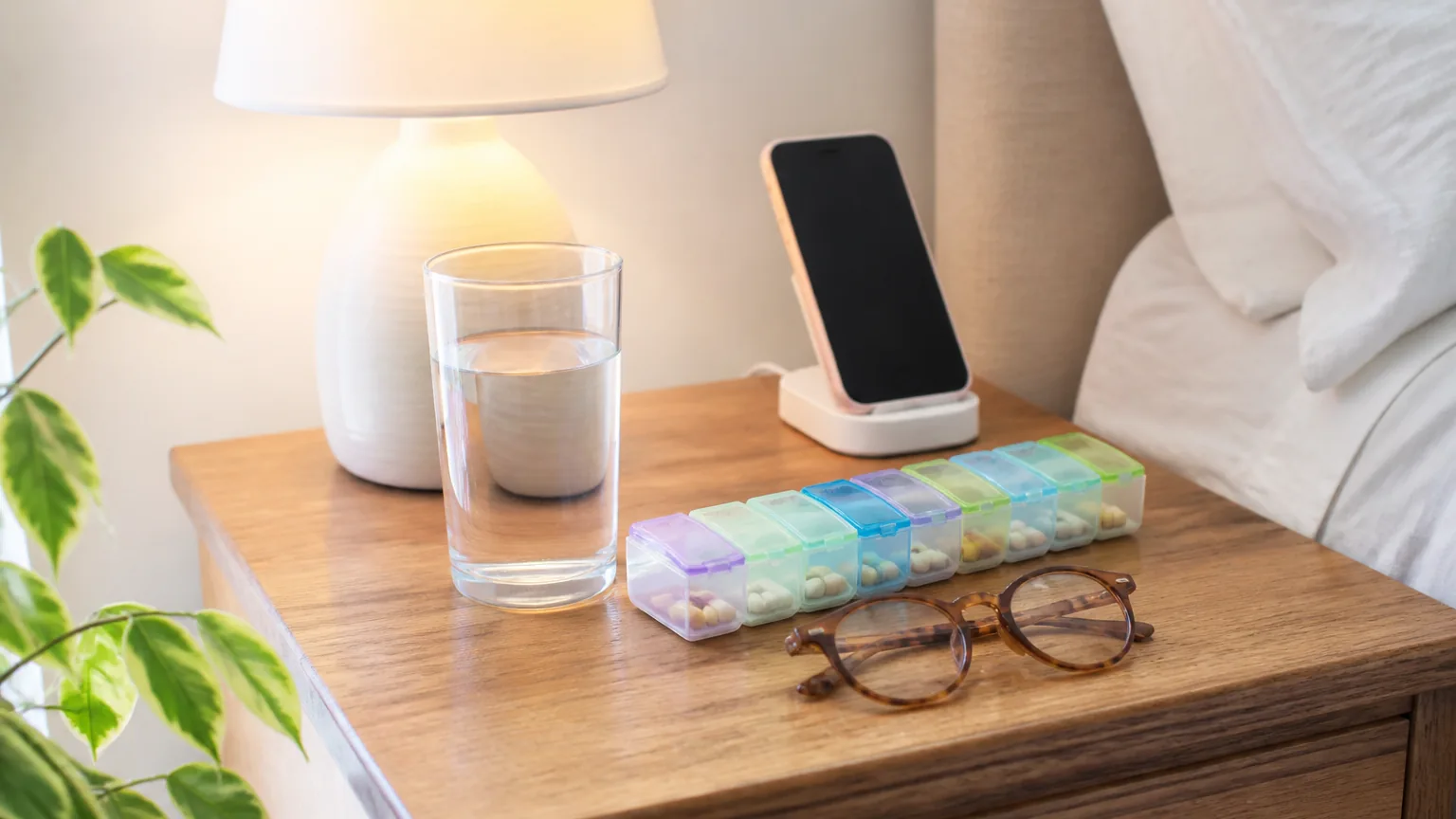
Plan for the first forty-eight hours specifically
The first two days after most procedures are the hardest, before pain medication is dialed in and before strength starts returning. If possible, arrange for someone to be in the house, or at least reachable by phone, during that window. A shower chair and a handheld showerhead remove one of the more dangerous parts of an early recovery: standing wet and unsteady in a slick tub. Set them up beforehand, not after the surgery.
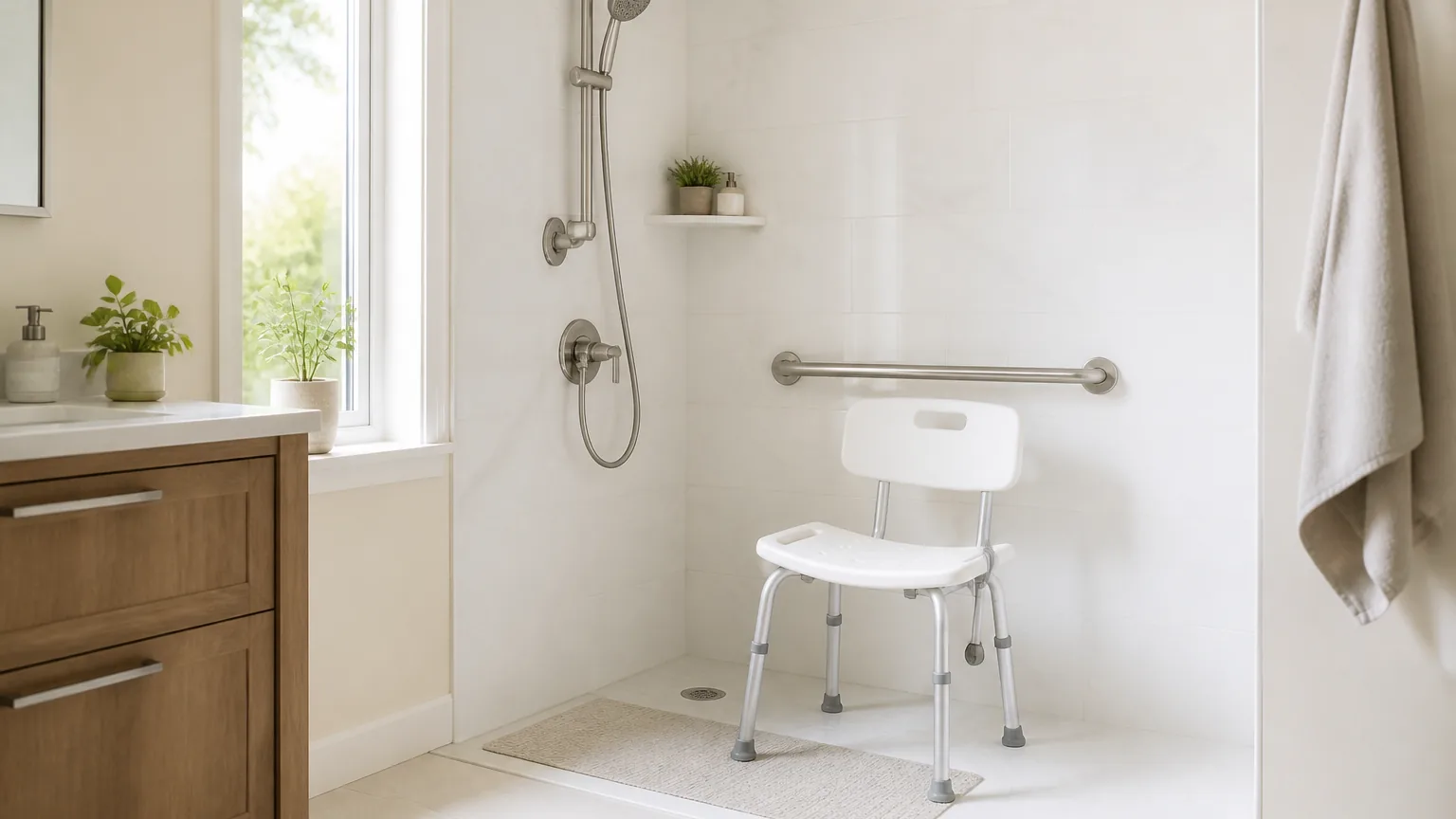
Ask the surgical team what is specific to this recovery
General home safety covers most of it, but every procedure has its own restrictions — no bending, no lifting, no stairs, a specific sleeping position. Ask directly what applies before the surgery, not as an afterthought at discharge, so the room can be arranged around the real restriction rather than a guess. The National Institute on Aging has a general home safety checklist that is a reasonable starting point for the rest of the house once the bedroom itself is settled.
None of this requires a renovation. Most of it is an afternoon of moving furniture, adding a light, and putting the right things within reach. Doing it now, while there is still time to think it through, beats managing it later from a hospital bed.
| Focus | What to set up |
|---|---|
| The bed | A height that makes sitting and standing easy, and a firm edge to push from |
| The path | A clear, straight, obstacle-free route to the bathroom |
| Night lighting | Motion lights along that path |
| Within reach | Water, medications, phone, and glasses at the bedside |
| First 48 hours | Everything needed staged before surgery day |
To set the room up, work in this order:
- Set the bed to a height that makes sitting and standing easy.
- Clear a straight, obstacle-free path to the bathroom.
- Light that path for the middle of the night.
- Bring water, medications, phone, and glasses within arm's reach.
- Stage everything for the first forty-eight hours before surgery day.
- Ask the surgical team what is specific to this recovery.
Key Takeaways
- Set the bedroom up before the surgery, not after, while there is still time to think it through calmly.
- The transfer in and out of bed happens more than any other move during recovery, so an adjustable bed or a sturdy bed rail matters most in the first week.
- Walk the bed-to-bathroom route at night with the lights off and clear every rug, cord, and obstacle before the operation.
- Add motion-activated night lighting and a bedside station with water, medications, a phone, and glasses within arm's reach.
- Plan for the first forty-eight hours specifically, and ask the surgical team what restrictions are unique to this procedure.