Products that support independence and safe movement — from walkers and canes to power chairs, ramps, and bathroom safety essentials.
Choose a standard walker for maximum stability and weight-bearing, a rollator (four wheels, a seat, and brakes) if you can walk but tire and need to rest, and an upright walker if you want a taller, more natural posture. Getting the type and height right is what makes a walker feel safe instead of awkward.
Types of walkers
Type
How it moves
Best for
Standard (no wheels)
You lift it each step
Maximum stability; weight-bearing; slow, deliberate walking
Two-wheel walker
Front wheels glide, back legs grip
Some support with easier movement than lifting
Rollator (4 wheels + seat + brakes)
Rolls continuously
Can walk but tire; needs to rest; outdoor or longer distances
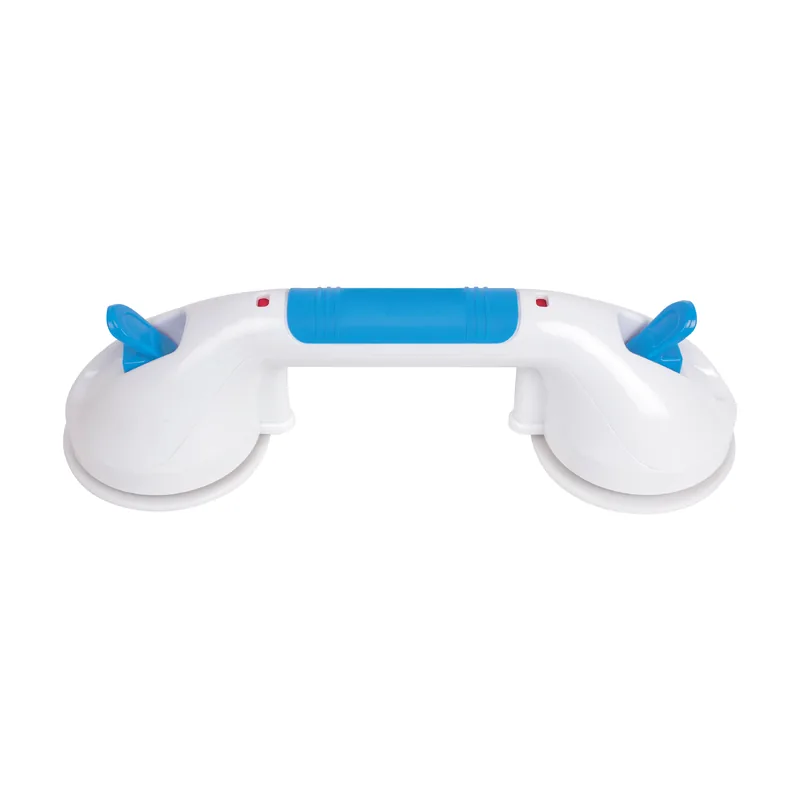
A no-drill suction grab bar that locks onto tile or glass in seconds — a balance-assist handhold for renters and anyone who cannot put a screw in the wall.
Key features
Dual locking suction cups with a built-in indicator that shows at a glance whether the seal is holding — check it before every use
Installs and removes without tools, screws, or wall damage — reposition it as needs change
Rated by Carex to 75 lb as a balance assist only: it is not designed to bear body weight or to be pulled on for leverage when standing up or lowering down
Best for
Renters, apartment dwellers, or anyone who cannot drill into bathroom walls and wants a handhold to steady their balance at the shower threshold | A quick, no-installation-hassle gift for a parent in a rental or condo where permanent grab bars are not an option.
Worth knowing
Carex rates this bar for balance assistance only, up to 75 lb — never for body weight or leverage. If that is what is needed, choose a permanently mounted grab bar instead. Suction only holds securely on smooth, non-porous surfaces — tile, glass, fiberglass. It will not hold on textured tile, wallpaper, or unsealed grout. Check the suction seal periodically, especially after cleaning the surface with certain soaps.
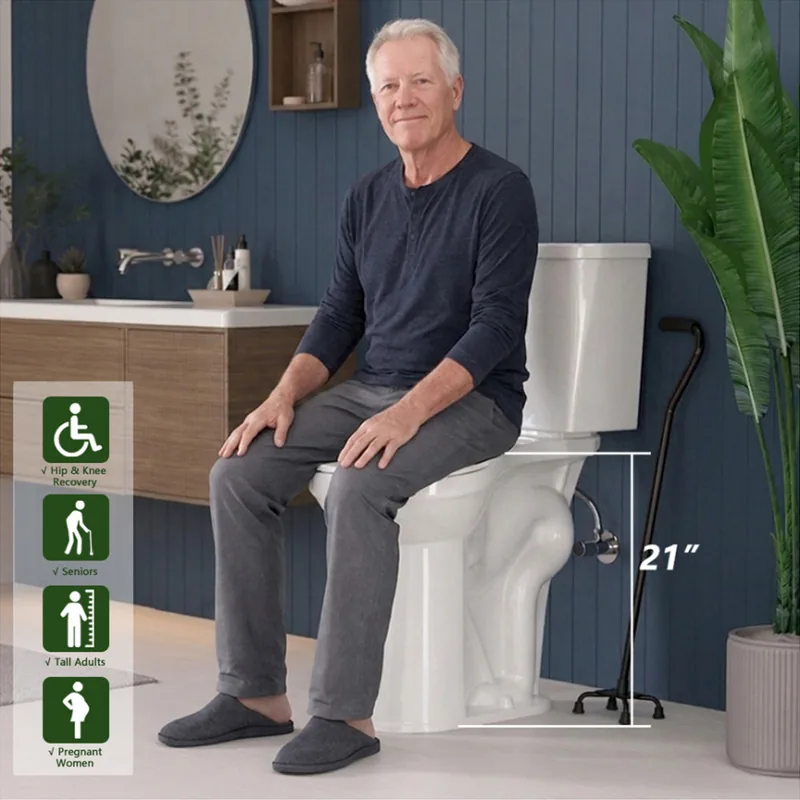
A 21-inch comfort-height toilet, two inches above ADA-standard, designed to reduce the knee-bend angle that makes sitting and rising painful.
Key features
1.28 GPF single flush — WaterSense certified; one lever, no dual-button mechanism
12-inch rough-in — fits the standard floor drain position in most US bathrooms without plumbing relocation
Two-piece construction (tank + bowl sold together) — ships separately for easier navigation through narrow doorways at installation
Elongated bowl — 2 inches longer front-to-back than a round bowl, adding seating area for larger adults
Available in white (bone) and matte black to match existing bathroom finishes
Toilet seat sold separately — must be elongated-bowl compatible; confirm seat height and hinge spacing before ordering
Best for
Seniors with hip or knee stiffness who find rising from a standard toilet difficult, and taller adults for whom standard bathroom fixtures have always felt sized for someone shorter.
Worth knowing
At 21 inches, this toilet sits higher than ADA-compliant models and significantly higher than a standard toilet. Shorter adults or children sharing the bathroom may find the height uncomfortable or their feet unable to rest flat on the floor. A compatible elongated toilet seat must be purchased separately before the toilet is usable.
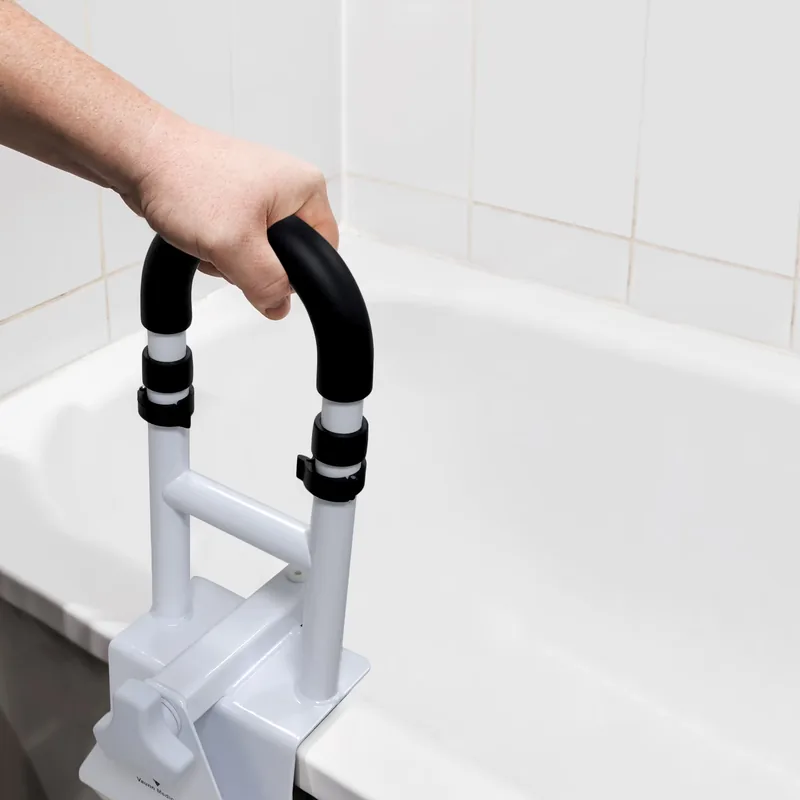
A powder-coated steel bathtub rail that clamps onto a flat tub wall — a steady handhold for stepping in and out, with no wall drilling.
Key features
Clamps to the tub's edge rather than the wall, so it works in bathrooms where wall mounting is not possible or allowed
Vaunn says the clamp fits flat-walled standard tubs 3 to 7 inches thick, and rates the rail to 300 lb
The handle adjusts from 17 to 20 inches tall, and rubber pads grip the tub wall without marking it
Best for
Seniors who need sturdier support than a suction bar provides but can't or don't want to drill into bathroom walls | A dependable gift for a parent's bathroom where wall-mounting a permanent grab bar isn't practical.
Worth knowing
Vaunn says it is not intended for fiberglass, curved, angled, or textured tubs, so check what your tub is made of before ordering. Not a substitute for a wall-mounted bar for someone who needs maximum load-bearing support.
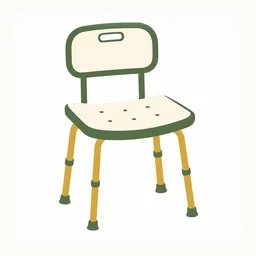
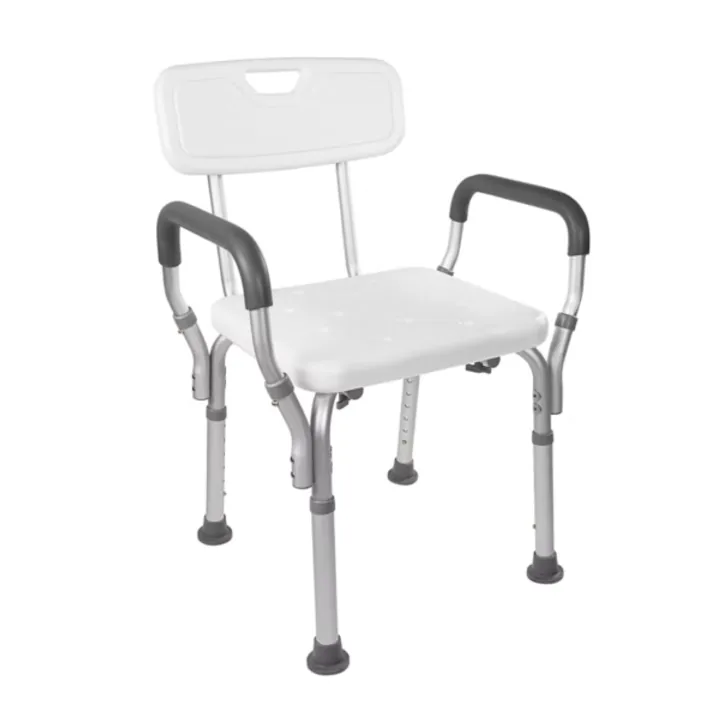
A padded shower chair with full arms and a backrest, rated to 350 lbs — more cushioned support than a basic bench for longer or more comfortable showers.
Key features
Padded seat, armrests, and backrest add comfort basic shower benches don't offer, useful for anyone showering for longer stretches
350 lb weight capacity — higher than most standard shower chairs on the market
Adjustable leg height accommodates different shower and tub configurations
Best for
Seniors who shower for longer periods, tire easily while standing, or need more back and arm support than a simple shower bench offers | A comfort-focused upgrade gift for a parent who already uses a shower chair but finds a basic bench uncomfortable.
Worth knowing
Larger and bulkier than a basic shower bench due to the padding and full arm/backrest — measure the shower or tub space before ordering. Padded surfaces need periodic cleaning to prevent mildew in a consistently wet environment.
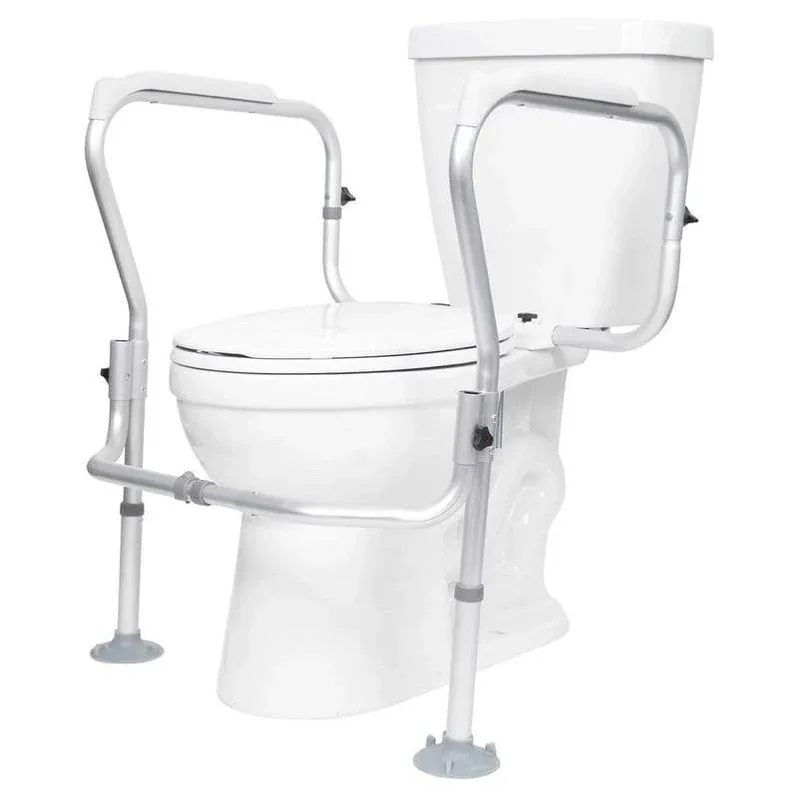
A stand-alone toilet safety frame with padded arms — fits around your existing toilet with no tools, cementing, or wall drilling required.
Key features
Tool-free installation fits around most standard and elongated toilets without drilling or cementing
Padded armrests provide a comfortable, non-slip grip point for pushing up to stand
300 lb weight capacity frame stays stable during regular daily use
Best for
Seniors who need support standing from the toilet specifically, without a larger bathroom safety overhaul | A focused, easy-to-install gift for a parent recovering from surgery or a fall who needs one specific safety fix.
Worth knowing
Free-standing frames sit around the toilet rather than bolting to the floor or wall, so check that the base fits your toilet's footprint and bathroom clearance before ordering. Less load-bearing than a wall-mounted, stud-anchored bar for someone with more significant mobility needs.
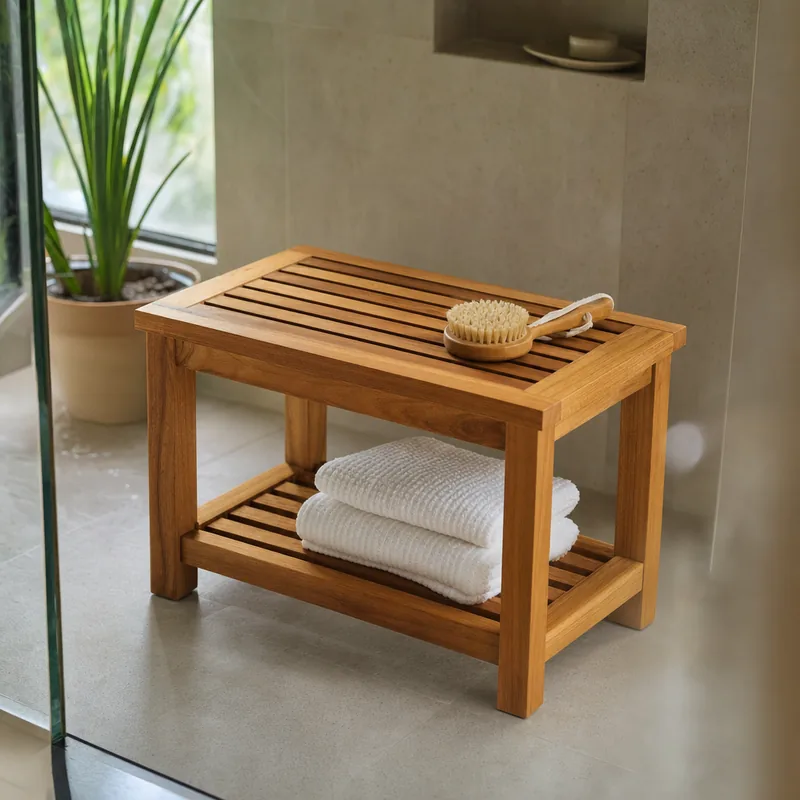
A teak shower bench that reads as spa furniture, not medical equipment — stable support in a form people are willing to have.
Key features
Teak finish — spa look, not medical
Mold and mildew resistant
Adjustable height 14"–22"
Non-slip rubber feet
Supports up to 300 lbs
Best for
Seniors with balance concerns, post-surgery restrictions, or fatigue during showers — teak construction holds up to daily use and fits any bathroom aesthetic. | A shower safety gift that doesn't look medical — the teak finish is spa-appropriate, making it far more likely a parent will actually keep using it.
Worth knowing
Non-teak models are available at lower price points if aesthetics are less of a concern.
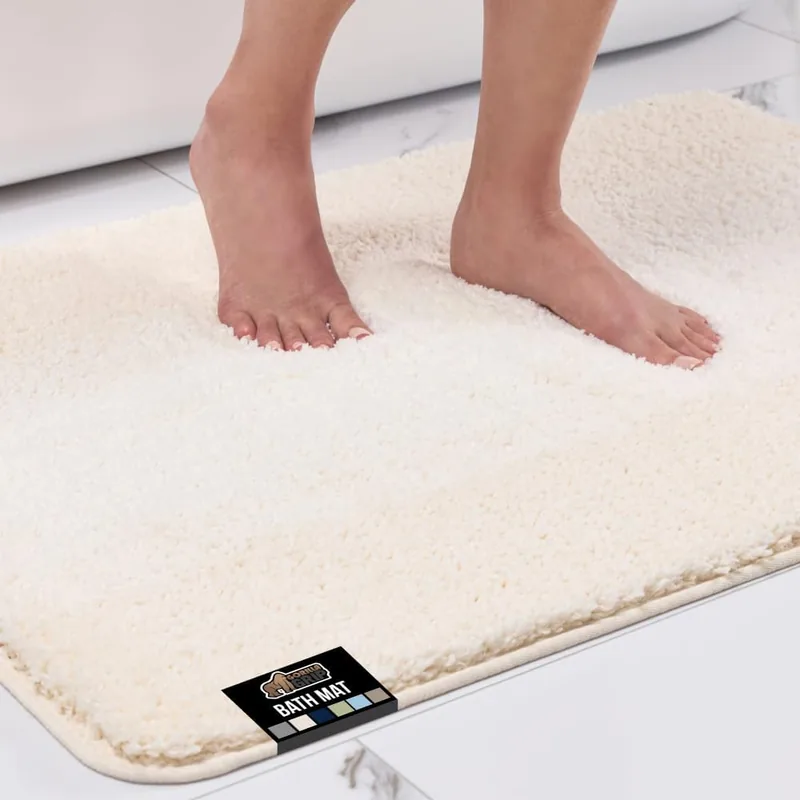
280 suction cups and machine washable. For smooth bath and shower floors only.
Key features
280 suction cups that grip a flat, even surface
Drainage holes let water pass through the mat
Machine washable on a cold, gentle cycle
Best for
Households whose bath floor is smooth and even. | A practical bathroom safety gift, once you have checked that the recipient's bath floor is smooth.
Worth knowing
Use only on smooth, clean, non-textured, non-tiled surfaces, and not on newly refinished tubs or shower pans. Press down firmly after placing so every cup seats, and check it before each shower. A mat lowers the risk of slipping but does not replace grab bars.
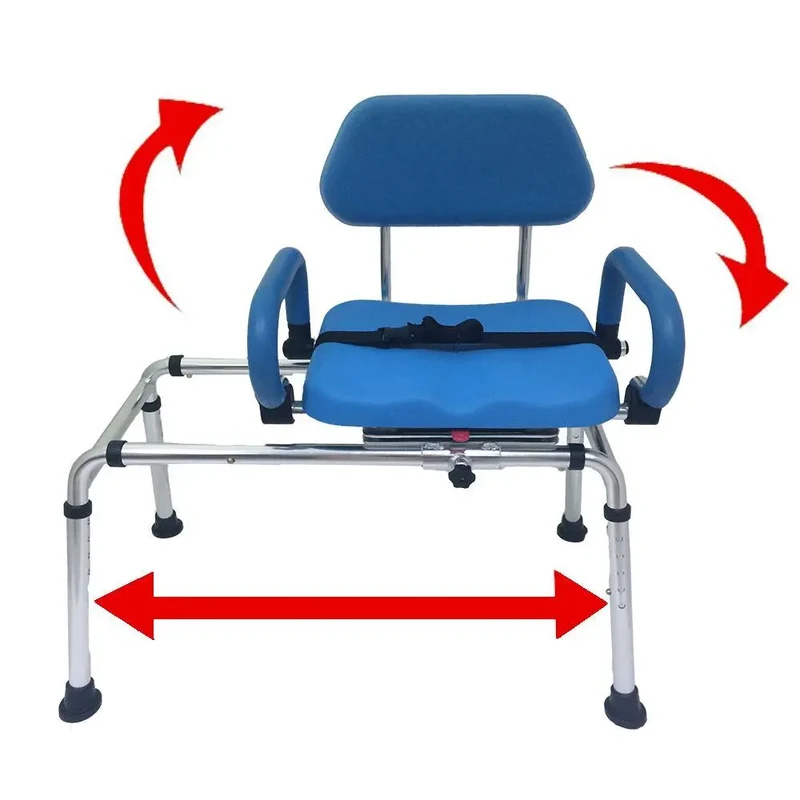
A transfer bench that straddles the tub edge — sit on the outside half, swing legs over, and slide in, eliminating the dangerous step-over.
Key features
Straddles tub edge — no step-over
Reversible for left or right drain
400 lb capacity aluminum frame
Adjustable height legs
No installation required
Best for
Seniors who prefer bathing but cannot safely step over the tub edge — slide in from outside the tub without lifting a leg over the side. | A practical gift addressing one of the most specific mobility barriers in the home — immediate, significant bathroom safety impact worth investing in.
Worth knowing
Requires some upper body strength to slide across the bench — not suitable for seniors with very limited upper body mobility.
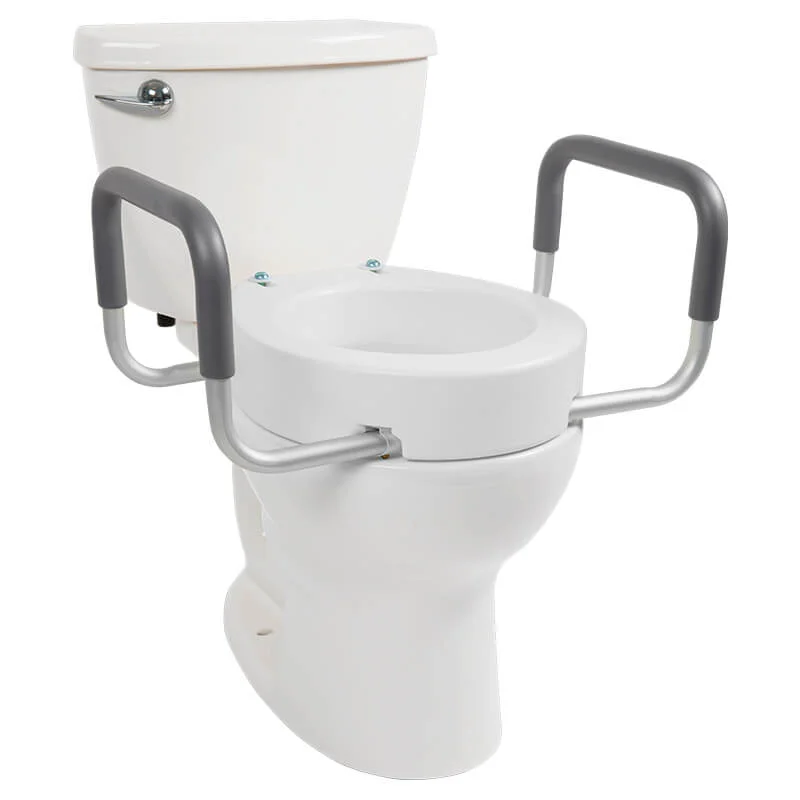
Adds 5 inches of height with padded armrests. Fits most standard and elongated toilets. No tools required.
Key features
Vive rates the riser to 250 lb; the two padded handles are removable and sit far enough forward to push down on when standing, rather than only steadying balance
The locking lever clamps to the bowl rim from the inside — nothing is screwed into the porcelain, and nothing is left behind if it is removed
Lifts off in one piece for cleaning, so everyone else in the household can still use the toilet normally
Best for
Seniors with arthritis, hip replacement, or reduced leg strength who struggle to lower onto and rise from a standard toilet — installs in seconds, no tools needed. | A practical bathroom safety gift that makes an immediate daily difference — used multiple times every day, installs in seconds with no tools.
Worth knowing
Measure your toilet before buying — this fits most but not all toilet shapes. Check compatibility before purchasing.
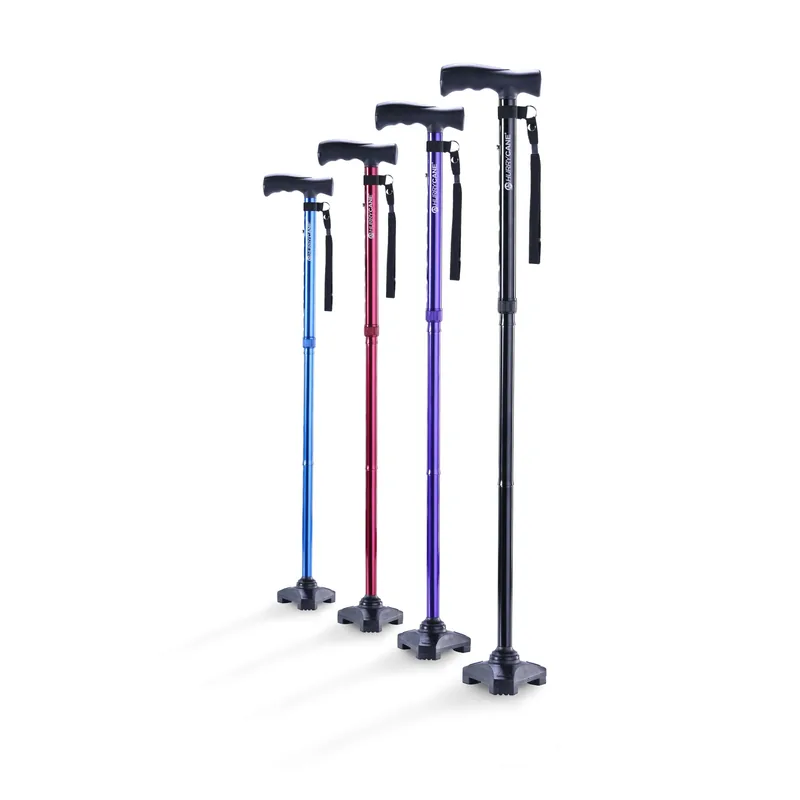
Seniors who need light outdoor balance support — or frequent travelers who want cane security that folds small enough to pack in any bag. | A practical mobility gift for a parent who travels or wants cane support that disappears when not in use — folds into a compact carry size.
Worth knowing
Designed for light support — not a full mobility aid. For those needing significant weight-bearing assistance, a quad cane or walker provides more stability.
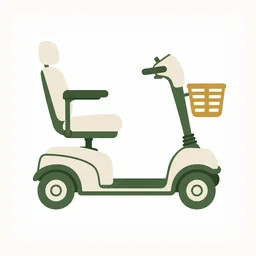
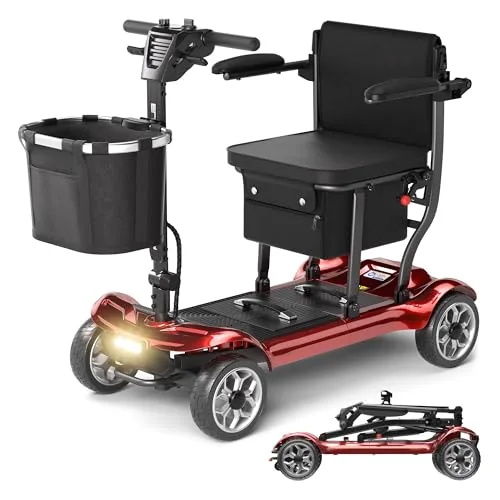
A folding travel mobility scooter with a detachable battery — the maker calls it airline approved, but the airline decides, so check before you book.
Key features
The maker's listing describes a detachable lithium battery, yet its own specification table says lead-acid — read the label on the battery itself before relying on either
Folds down small enough to fit in many car trunks without disassembly tools
The listing states a 10-mile driving range and a 300 lb weight capacity
Best for
Seniors who want to keep traveling — flights, cruises, museum and theme park visits — but need mobility support that meets airline requirements | A travel-enabling gift for a parent who has been declining trips because a mobility scooter felt too complicated to bring along.
Worth knowing
Airline battery policies vary by carrier and change periodically — always confirm current battery watt-hour limits with the specific airline before flying. Lighter folding scooters generally have a lower weight capacity and shorter range than full-size scooters.
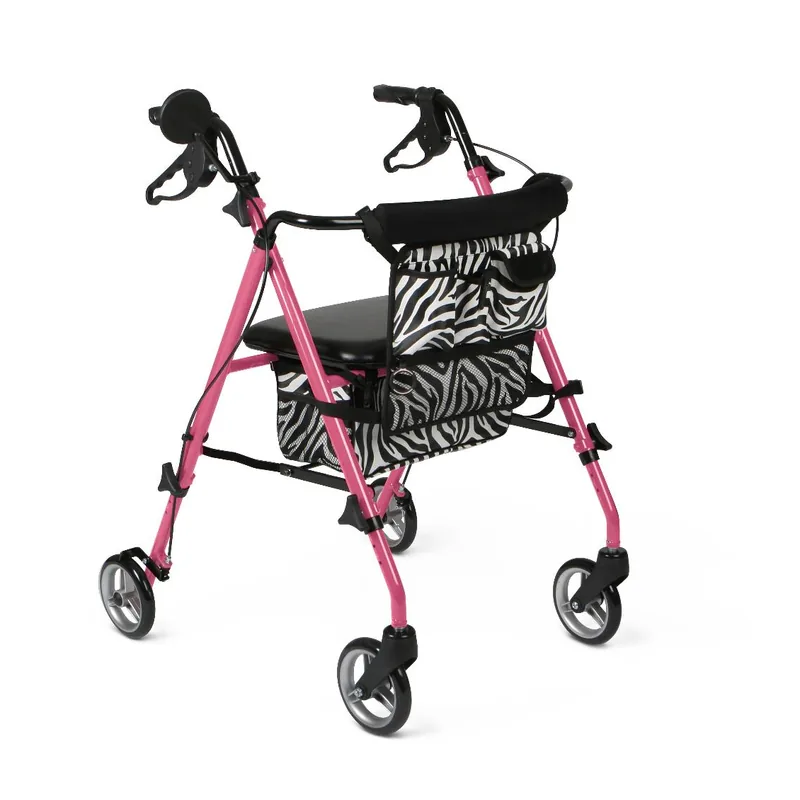
A lightweight rollator in a bold pink-and-zebra print — genuine mobility support that reads as a fashion statement rather than a medical device.
Key features
At just under 15 lbs, it's lighter than most standard rollators, making it easier to lift into a car trunk
6-inch wheels handle sidewalks and indoor floors smoothly without the bulk of larger all-terrain wheels
Folds flat for storage and transport, standing upright when folded rather than falling over
Best for
Seniors who need a rollator but have resisted using one because standard designs feel too clinical or aging | A gift that can genuinely shift how willing a parent is to use mobility support, when the standard silver-and-black look has been the sticking point.
Worth knowing
6-inch wheels are best suited to smooth indoor and sidewalk surfaces — for regular use on gravel, grass, or uneven outdoor terrain, a rollator with larger wheels performs better. 250 lb weight capacity — check this fits before ordering.
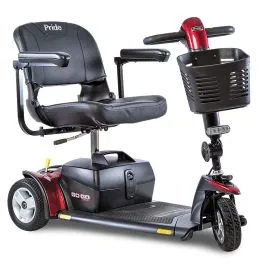
A disassemble-for-travel 3-wheel scooter from Pride Mobility — 325 lb capacity, up to 12.75 miles of range, and a heaviest piece of 35.75 lb.
Key features
Disassembles into five pieces for car trunk transport — no ramp or lift needed for most sedans
Top speed of 4.7 mph, suited to errands, appointments, and outdoor outings
Pride Mobility is one of the most established names in the mobility scooter category, backed by widely available parts and service support
Best for
Seniors who need a reliable, well-supported scooter for everyday errands and appointments, from a brand with long-term parts and service availability | A higher-consideration gift for a parent who needs genuine everyday mobility support, not just an occasional-use scooter.
Worth knowing
Sits above budget folding scooters in price — the trade-off is Pride's established reliability and parts support. Disassembling and reassembling the pieces for transport takes a bit more effort than a scooter that folds as one unit.
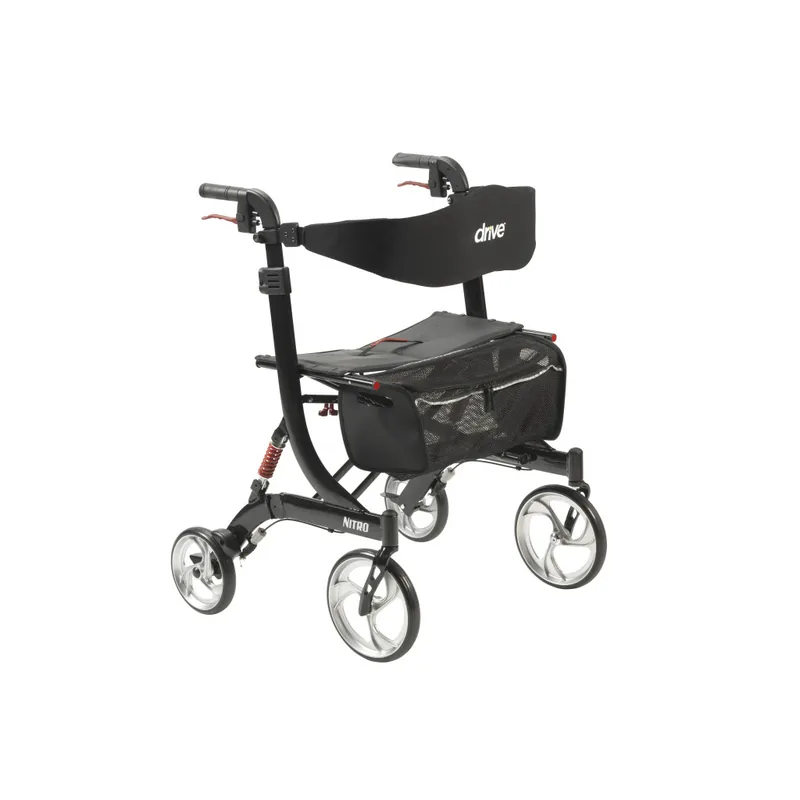
Lightweight aluminum rollator with a seat, front swivel wheels, and a quick-folding frame — handle height adjusts from 33.5 to about 38 inches.
Key features
Ten-inch front casters swivel for turning in a supermarket aisle
Folds side to side rather than front to back, so it stands upright behind a car seat instead of lying across the trunk; Drive lists the standard Nitro at 18 pounds and the Nitro DLX at 22 pounds
Loop brakes lock the rear wheels for sitting, with the cables routed inside the frame where they cannot snag
Rated to 300 pounds, with a removable zippered storage bag
Best for
Seniors who are steady enough on their feet but tire over distance and want somewhere to sit down partway through a shop or a walk. | Adult children buying a first mobility aid for a parent who is resisting the idea — this one reads as designed equipment rather than a hospital device, which is often what tips the decision.
Worth knowing
Operating the loop brakes takes a reasonable amount of hand grip, worth testing before buying for someone with significant arthritis. A rollator is a walking aid rather than a wheelchair and is not designed to be pushed with someone sitting on it. The wheels handle pavements and short grass but not gravel drives or genuinely rough ground.
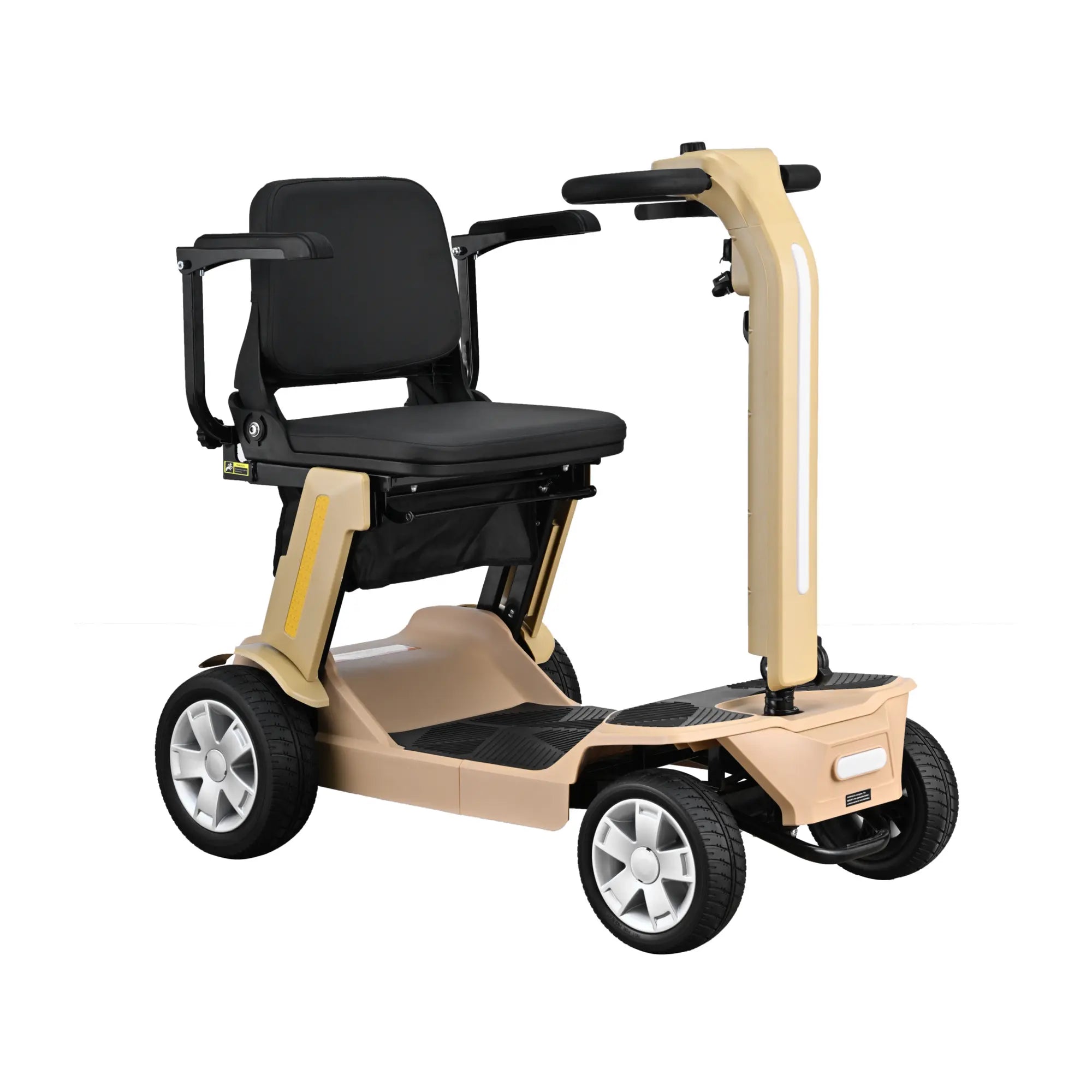
Folding electric mobility scooter with a lithium-ion battery — Reyhee lists up to 12 miles of range, a 300 lb capacity and a weight of 88 lb.
Key features
Folds in two steps: push the seat down, then fold the tiller against the deck
Top speed of 4 mph, roughly walking pace, which keeps it usable alongside someone on foot
Two rear anti-tip wheels and electro-mechanical brakes
Best for
Seniors wanting mobility independence at airports, malls, and events
Worth knowing
This is heavy to lift, so plan how it gets into the car before you buy. Built for smooth surfaces such as sidewalks, terminals, and store floors rather than gravel, grass, or steep slopes. Quoted range assumes a level route and a moderate load, so expect noticeably less on hills. Storage is limited to a small area under the seat, so a separate bag or basket is needed for shopping.
The key difference is weight-bearing vs. continuous motion. Choose a standard or two-wheel walker if you need to put real weight on the frame for stability, or you move slowly and deliberately. Choose a rollator if you can walk but tire easily, need a place to sit and rest, or want a steadier pace — its four wheels roll continuously and hand brakes give control, but it offers less lean-on stability than a standard walker. If you are unsure, a physical therapist can match the device to your gait and strength.
How to choose a walker
With the walker in front and your arms relaxed, the hand grips should line up with the crease of your wrist, giving about a 15° bend at the elbow (Mayo Clinic). Confirm the weight capacity fits the user (bariatric models go higher), measure your narrowest doorway, and match wheel size to your terrain — larger wheels for outdoors, no-wheel or small-wheel for indoor stability. On a rollator, make sure the hand brakes are easy to squeeze and lock. From the catalog, the Drive Medical Nitro rollator is a four-wheel model with a seat and hand brakes.
Frequently Asked Questions
Canes, rollators (wheeled walkers), and power wheelchairs are the most widely used. The right choice depends on your stability needs, the environments you navigate, and how much upper-body strength you have. An occupational therapist or physical therapist can recommend the most appropriate option.
Power wheelchairs are generally better suited to indoor use: they are more maneuverable in tight spaces and offer better postural support. Mobility scooters handle well outdoors and on smooth surfaces but can be difficult to navigate in small rooms or narrow hallways.
Yes — significantly. Research shows that using appropriate mobility aids reduces fall risk, expands the range of activities seniors can safely undertake, and delays the need for higher levels of care. Early adoption of the right aid is generally better than waiting until a fall occurs.
Content on this page is for informational purposes only and does not constitute medical or financial advice. A physical therapist can confirm the right walker or cane type and height. Medicare coverage varies by plan — confirm at Medicare.gov or with your plan before purchasing.