

Mobility
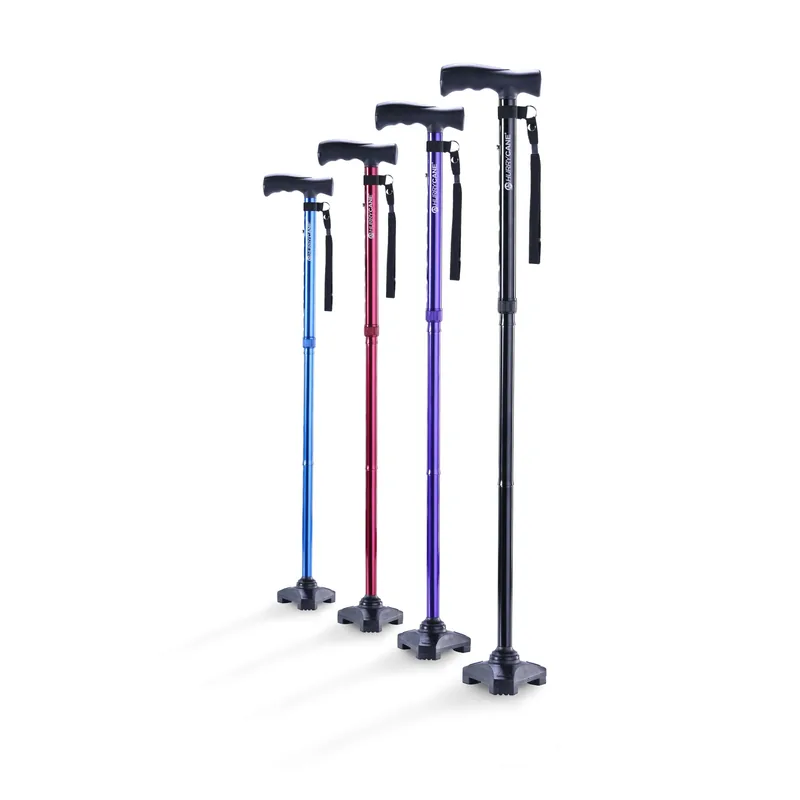
HurryCane Freedom Edition Folding Cane
Pivoting base adjusts to uneven surfaces. Folds compactly for travel. 360-degree rotating tip.
Key features
- Stays planted on curbs, pavement cracks, cobblestones, and sloped driveways — the surfaces where a fixed-tip cane rocks or slides out
- Folds to 12 inches for bag or pocket storage
- Arthritis-friendly grip — wide, contoured, soft-touch handle
Best for
Seniors who need light outdoor balance support — or frequent travelers who want cane security that folds small enough to pack in any bag. | A practical mobility gift for a parent who travels or wants cane support that disappears when not in use — folds into a compact carry size.
Worth knowing
Designed for light support — not a full mobility aid. For those needing significant weight-bearing assistance, a quad cane or walker provides more stability.
Where to buy