
What is the difference between a cane, walker, and rollator — and which is right?
A cane addresses mild balance concerns; a rollator is for people who need stability and occasional seated rest; a standard walker for maximum support. The right choice depends on the specific balance and strength issue, not general mobility. A physiotherapist assessment produces a better recommendation than any online guide.
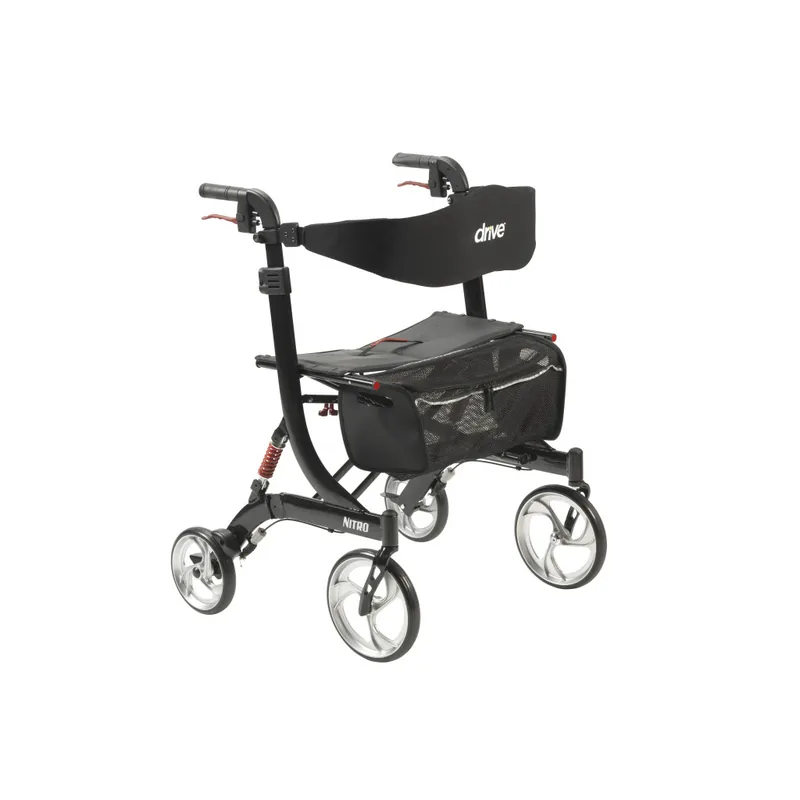
Drive Medical Nitro DLX Rollator Walker
Lightweight aluminum rollator with a seat, front swivel wheels, and a quick-folding frame — handle height adjusts from 33.5 to about 38 inches.
Key Features
- Ten-inch front casters swivel for turning in a supermarket aisle
- Folds side to side rather than front to back, so it stands upright behind a car seat instead of lying across the trunk; Drive lists the standard Nitro at 18 pounds and the Nitro DLX at 22 pounds
- Loop brakes lock the rear wheels for sitting, with the cables routed inside the frame where they cannot snag
- Rated to 300 pounds, with a removable zippered storage bag
Best for
Seniors who are steady enough on their feet but tire over distance and want somewhere to sit down partway through a shop or a walk.
Adult children buying a first mobility aid for a parent who is resisting the idea — this one reads as designed equipment rather than a hospital device, which is often what tips the decision.
Worth knowing
Operating the loop brakes takes a reasonable amount of hand grip, worth testing before buying for someone with significant arthritis. A rollator is a walking aid rather than a wheelchair and is not designed to be pushed with someone sitting on it. The wheels handle pavements and short grass but not gravel drives or genuinely rough ground.
I may earn a commission if you buy through this link, at no extra cost to you.
As an Amazon Associate I earn from qualifying purchases.
How this works
What is the difference between a rollator and a walker?
Frequently Asked Questions
Yes — it folds in seconds for easy car storage.
Yes — a built-in seat allows rest breaks anywhere.
Yes. The handles are set with a push-button pin during assembly. Drive also sells tall and euro-style versions on the same frame, so check the model code if a particular height range matters.
Where this information comes from
These sources offer further reading. I identify claims from the maker as manufacturer claims in the page text.
How does it compare?
Other options in this category worth considering.
| Product | Price | Best for |
|---|---|---|
| Drive Medical Nitro DLX Rollator Walker This pick | See Amazon | Seniors who are steady enough on their feet but tire over distance and want somewhere to sit down partway through a shop or a walk. | Adult children buying a first mobility aid for a parent who is resisting the idea — this one reads as designed equipment rather than a hospital device, which is often what tips the decision. |
| Medline Posh Lightweight Rollator | See Amazon | Seniors who need a rollator but have resisted using one because standard designs feel too clinical or aging | A gift that can genuinely shift how willing a parent is to use mobility support, when the standard silver-and-black look has been the sticking point. |
| Airline-Approved Lightweight Folding Mobility Scooter | $899–$1099 | Seniors who want to keep traveling — flights, cruises, museum and theme park visits — but need mobility support that meets airline requirements | A travel-enabling gift for a parent who has been declining trips because a mobility scooter felt too complicated to bring along. |
| Pride Go-Go Sport 3-Wheel Mobility Scooter | See Amazon | Seniors who need a reliable, well-supported scooter for everyday errands and appointments, from a brand with long-term parts and service availability | A higher-consideration gift for a parent who needs genuine everyday mobility support, not just an occasional-use scooter. |
Prices are approximate ranges — check each retailer for today's price.
More in this category
Browse Scooters & RollatorsLast updated: .