
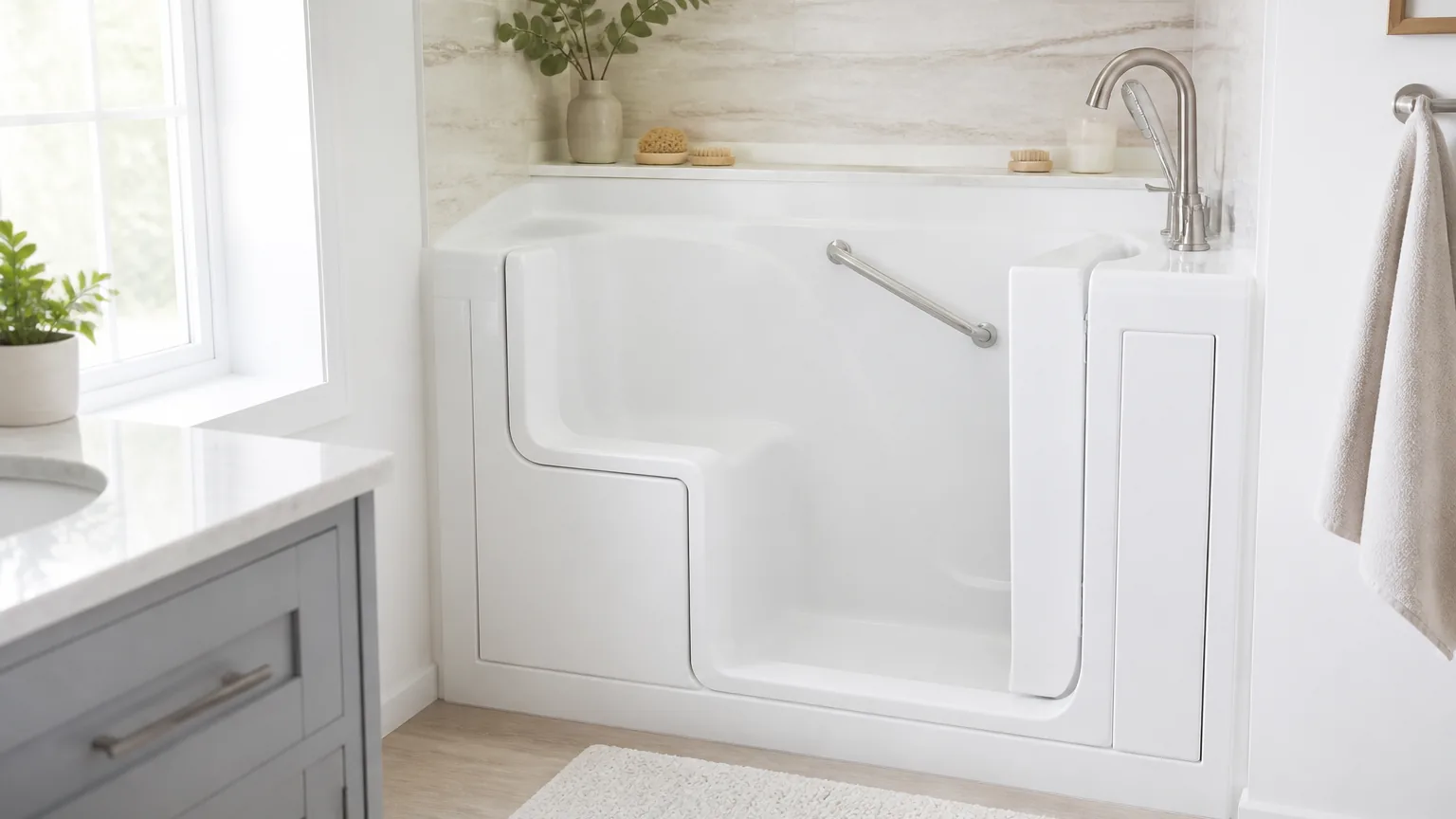
The bathroom is where most home falls happen — and a walk-in tub is one of the most-marketed solutions. Here's what the sales brochures leave out.
The bathroom is the single most fall-prone room in a senior's home. Wet, hard surfaces. A high step over a traditional tub wall. And nothing to hold onto at the exact moment balance matters most. It's a predictable setup for a bad afternoon. The Centers for Disease Control and Prevention reports that bathrooms are most hazardous for people in the oldest age groups. Walk-in tubs are marketed directly at this fear, and for good reason: a low, sealed-door entry removes the single biggest hazard, the step-over. But the category is also expensive, heavily advertised, and not always the right first move. Here's what actually matters when evaluating one.
What a walk-in tub solves — and what it doesn't
A walk-in tub replaces the high tub wall with a low threshold and a door that seals once closed. The threshold is typically 3 to 5 inches, versus 14 to 17 inches on a standard tub. That single change removes the highest-risk motion in a traditional bathroom. Swinging a leg up and over a wet, slippery edge, while holding nothing but a shower curtain. For someone with limited hip mobility, balance issues, or a fear of falling that already keeps them from bathing, that's a real improvement. It changes daily quality of life.
What it doesn't solve is the wait. The tub has to fill before you can safely settle in, and you sit through the fill — typically 5 to 10 minutes. Then it has to drain before you can safely stand and open the door. That's another 5 to 10 minutes in a cooling, empty tub. For someone who gets cold quickly or has skin sensitivity, this is a real drawback that showroom visits rarely surface. A walk-in shower with a bench and handheld sprayer avoids this problem entirely and is usually cheaper to install. Which is the better fit depends on whether the person actually wants to soak, or just needs to get clean safely.
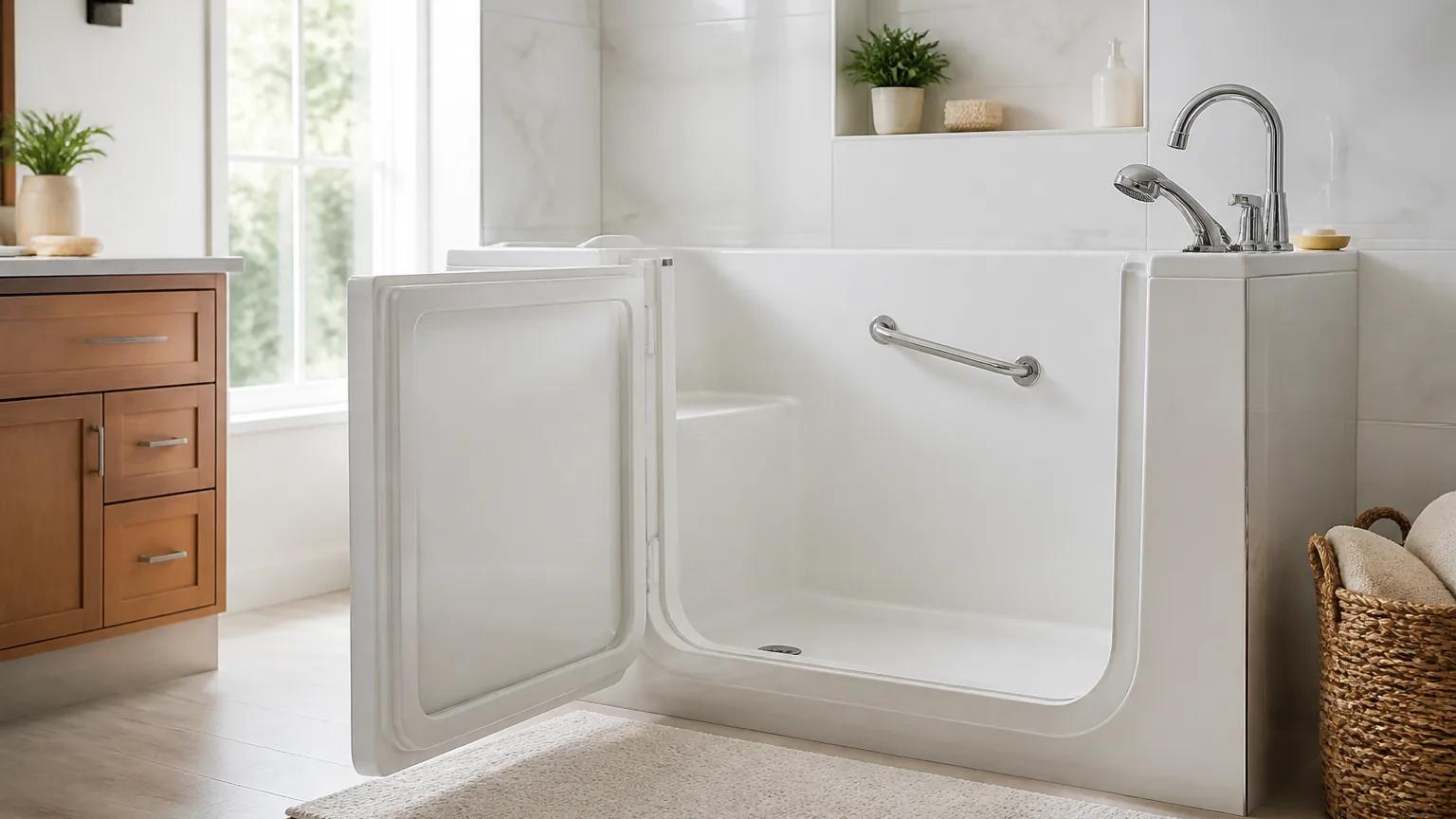
The door seal is the detail that makes or breaks the purchase
Nearly every walk-in tub complaint that shows up in consumer reviews traces back to the same point: the door seal. The door sits below the waterline once the tub is full. So a poor seal means a leak, onto the bathroom floor. That is exactly the hazard the tub was bought to remove. Ask any installer directly about the seal. How it's rated, and what the warranty covers specifically for leaks. Many warranties cover the tub shell but exclude door-seal failures. Others cover parts but not the labor to fix a leak once tile or subfloor is involved. A tub with a long, well-reviewed track record on this specific point is worth paying more for.
Questions worth asking before signing anything
- What is the actual, unrushed fill and drain time — timed, not the marketing number?
- Is there a heated seat, air jets, or built-in heater to keep water warm during a longer soak? These affect both comfort and the electrical work the installation requires.
- What is the threshold height, exactly, and does it match the person's real ability to step over it safely — not just under an advertised "low-entry" claim?
- Does the installation require removing and replacing tile, flooring, or a doorway, and is that included in the quoted price?
- What does the warranty cover, for how long, and does it include labor for a leak — not just parts?
Cost and what actually pays for it
Installed walk-in tubs typically run from roughly $2,000 for a basic model to $10,000 or more. The high end has jets, a heater, and involved plumbing or structural work. That range is wide because installation complexity — moving plumbing, reinforcing a floor, widening a doorway — often costs more than the tub itself.
Medicare does not cover walk-in tubs; they're classified as a home modification rather than durable medical equipment. Medicaid coverage varies a lot by state. It typically applies only through a Home and Community-Based Services (HCBS) waiver. That usually needs a documented medical need and a formal application. Start it well before you plan to buy, since approval can take months. Veterans may have access to the VA's Aid and Attendance benefit, or a home modification grant. A local Veterans Service Officer can advise on current eligibility. For everyone else, this is typically an out-of-pocket home improvement. That is exactly why getting the choice right the first time matters. Walk-in tubs are not a purchase most families make twice.
| Option | Rough cost | Best when |
|---|---|---|
| Basic walk-in tub | From about $2,000, plus installation | You want to keep soaking and struggle with the step-over of a standard tub, and you can accept the 5-to-10-minute fill and drain wait. |
| Higher-end walk-in tub (heated seat, air jets) | Up to $10,000 or more | Soaking or hydrotherapy is a priority and the budget allows for it. |
| Walk-in shower with a bench | Usually cheaper to install than a tub | The goal is bathing safely rather than soaking, with no fill or drain wait and no leak-prone door. |
| Grab bars, transfer bench, handheld showerhead, non-slip flooring | A few hundred dollars | Money is tight, or an occupational therapist finds smaller fixes remove the immediate risk. |
A cheaper first step, if you're not sure yet
If cost or uncertainty is the barrier, a full walk-in tub isn't the only option. It's rarely the first thing an occupational therapist recommends anyway. A home safety assessment — sometimes covered in part by Medicare as part of a broader physical or occupational therapy plan — can identify whether grab bars, a transfer bench, a handheld showerhead, and non-slip flooring solve the immediate risk for a few hundred dollars. That buys time to plan a larger renovation properly, rather than under pressure after a fall. The National Institute on Aging has a practical home safety checklist worth working through before any major purchase.
Choosing an installer
Because this category is heavily marketed with high-pressure, in-home sales presentations, it's worth treating the sales visit itself with some skepticism. A reputable installer will give a written quote that survives being taken away and compared, without a "today-only" discount attached to it. A few checks are ordinary due diligence, not distrust. Check for manufacturer certification. Ask for references from installations at least two years old — long enough for a door seal to prove itself. And confirm licensing and insurance for the plumbing and electrical work involved.
The bottom line
A walk-in tub can be a genuinely good investment. It fits when the goal is soaking, the household can handle the fill-and-drain time, and the door seal and installer are both solid. When the real goal is simply bathing safely, with less fear and less strain, a walk-in shower conversion is often the better choice. It's usually faster to install and less expensive. And it avoids the one recurring complaint — leaks — that shows up across almost every walk-in tub review. Either way, an occupational therapist's home safety assessment before any purchase is the step most families skip and most often wish they hadn't.
To buy a walk-in tub without regret, work in this order:
- Be clear on what it solves: a safer bath, not a fix for every mobility problem.
- Scrutinize the door seal, since a leak is the most common serious complaint.
- Ask the hard questions before signing: fill and drain time, heating, and the warranty.
- Understand the full cost, and what, if anything, helps pay for it.
- Consider a cheaper first step, like a shower chair and grab bars, if unsure.
- Get an occupational therapist's home safety assessment before buying.
Key Takeaways
- The door seal is the detail that makes or breaks a walk-in tub; almost every leak complaint in reviews traces back to it.
- Plan for the wait: most tubs take 5 to 10 minutes to fill and another 5 to 10 to drain, and the bather sits through both.
- Medicare does not cover walk-in tubs, since it treats them as a home modification rather than medical equipment; Medicaid help varies by state and usually needs an HCBS waiver.
- If the goal is simply bathing safely, a walk-in shower is often faster to install, less expensive, and free of the leak risk.
- Get an occupational therapist's home safety assessment before any major purchase; cheaper fixes may remove the risk for a few hundred dollars.
Free printable: the walk-in tub questions checklist, to take to a showroom or an installer visit.