
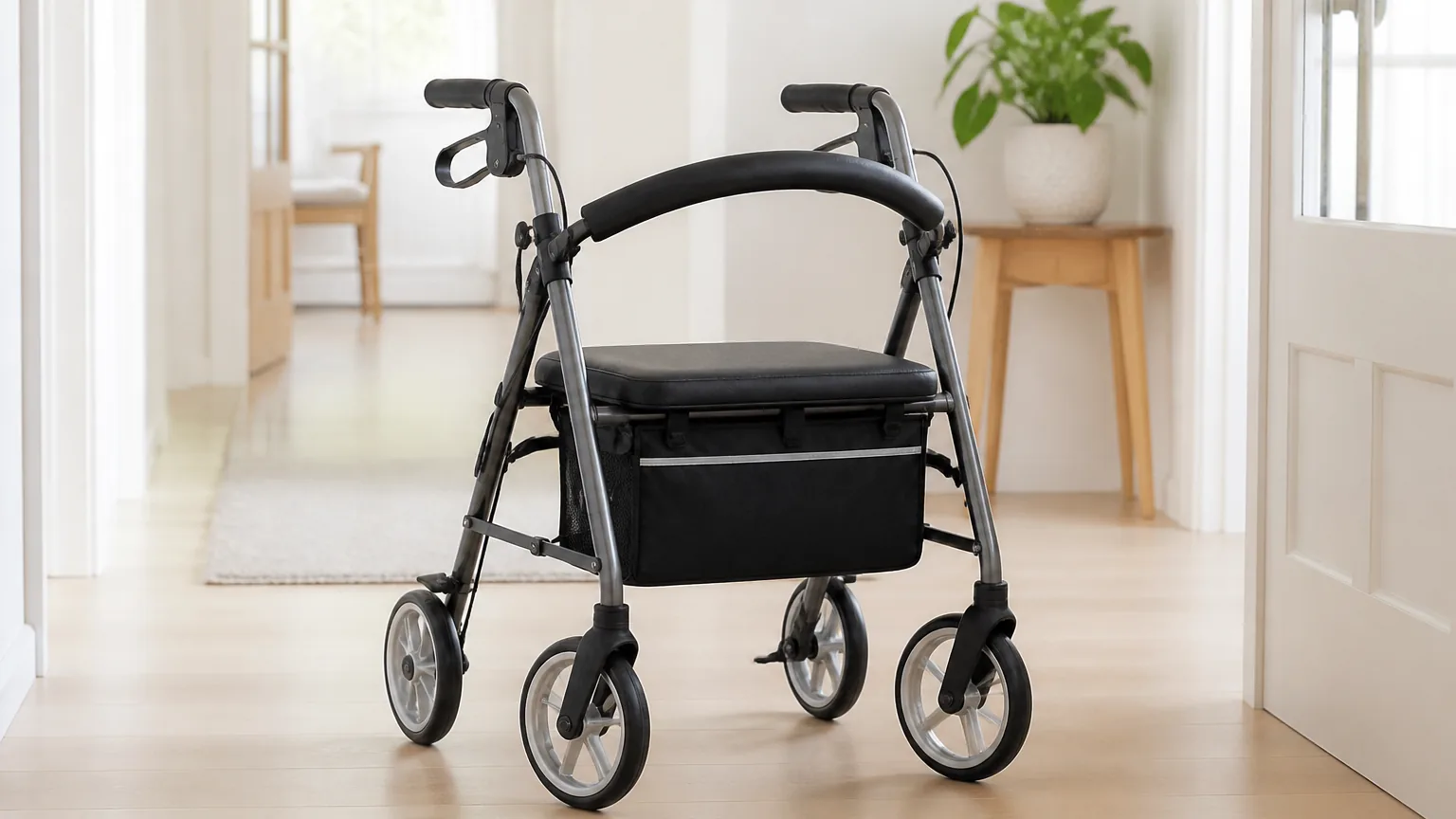
Yes — and rollators are named explicitly. The complications are all in how you buy it, not whether it qualifies.
Yes. Medicare Part B covers walkers, and Medicare.gov says clearly that this includes rollators. This is one of the more straightforward answers in the whole equipment category.
The conditions are simple: the walker must be medically necessary and prescribed by a doctor or other health care provider for use in your home. Meet those two conditions, and it's covered equipment.
What it actually costs
After the yearly Part B deductible — $283 in 2026 — you pay 20% of the Medicare-approved amount, as long as your supplier accepts assignment.
That 20% applies to the Medicare-approved amount, not the retail price. These are often different numbers, and the approved amount is usually the lower one.
Rent or buy
Medicare treats different equipment differently. Depending on the item, you may have to rent it, have to buy it, or get to choose. Some rented equipment becomes yours after a set number of payments.
It's worth finding this out before you order, not after — it decides whether you end up owning a walker or still paying monthly for one.
The assignment trap
This is the part that ends up costing families money, and it mostly hits rentals.
A supplier who participates in Medicare must accept assignment, which means they can only charge you the coinsurance and deductible on the approved amount. A supplier who doesn't participate doesn't have to accept assignment, and can charge more.
There's a further trap with rented equipment. If the supplier won't accept assignment for every month of the rental, you pay the full cost upfront and wait for Medicare to pay you back after processing the claim. That's a very different cash-flow situation from paying 20% as you go.
| Supplier | What you pay | Rental cash-flow |
|---|---|---|
| Participating (accepts assignment) | 20% of the Medicare-approved amount, after the Part B deductible ($283 in 2026). | Pay your 20% as you go. |
| Non-participating | May charge more than the Medicare-approved amount. | If assignment is not accepted for every rental month, you pay the full cost upfront and wait for Medicare to reimburse you. |
One question, asked before you order, avoids it completely: will you accept assignment for the whole rental period?
Upgrades beyond the basic model
Medicare pays for what's needed, not what's nicest. A basic model that meets the medical need is what gets approved. If your parent wants a lighter frame, better brakes, a padded seat, or a specific color, the supplier may offer an upgrade — with you paying the difference yourself.
That's a legitimate option, but it should be written down before you buy, not discovered on an invoice afterward. Ask which part of the price Medicare is approving and which part is the upgrade.
Repairs and replacement
Here's a useful detail that rarely comes up: for a walker you already own, you can use any Medicare-approved supplier for repairs, including replacing the parts needed. Families often buy a whole new walker when the old one could have been repaired under this benefit.
If a claim is denied
Denials on walkers usually come down to paperwork, not eligibility. A prescription that just names the item is weaker than one that explains the clinical reason it's needed — the mobility limitation, the fall history, the specific problem at home. If a claim is refused, that paperwork is usually the first thing worth fixing with the prescribing doctor before you file an appeal.
To get a walker or rollator covered with the fewest surprises, work in this order:
- Get a face-to-face visit and a written order that names the mobility limitation, not just the device.
- Use a supplier that accepts Medicare assignment, so the bill is only the 20 percent coinsurance.
- Decide rent or buy based on how long the need is expected to last.
- Keep the doctor's clinical notes on hand, and fix any gap in them before filing an appeal on a denial.
Key Takeaways
- Yes — Medicare Part B covers walkers, and rollators are named explicitly, when a provider prescribes one as medically necessary for home use.
- You pay 20% of the Medicare-approved amount after the Part B deductible ($283 in 2026) — not 20% of the retail price.
- The costly trap is assignment: confirm the supplier accepts it for every month of a rental, or you pay upfront and wait for reimbursement.
- Medicare pays for a basic model. Any upgrade, like a lighter frame or padded seat, is a difference you pay yourself — agree it in writing first.
- A walker you already own can be repaired through any Medicare-approved supplier, so you rarely need to buy a new one.
This article is part of a series. For the framework behind all of these answers, see Does Medicare Cover Assistive Devices? What Families Need to Know.
Sources
Coverage depends on your specific plan, your documented medical need, and your supplier. To confirm anything that matters to you: call Medicare on 1-800-MEDICARE, check your plan's Evidence of Coverage, or contact your State Health Insurance Assistance Program (SHIP), which provides free one-to-one counseling in every state.