
How often should a senior monitor blood pressure at home, and what readings should prompt a call to the doctor?
For seniors managing hypertension, twice-daily readings — morning before medication, evening before bed — are recommended during medication adjustments; weekly readings suffice once stable. Report promptly: systolic consistently above 180, below 90, or any reading accompanied by headache, chest pain, or visual changes. White coat hypertension is common in seniors, and home monitoring is the recommended way to distinguish it from true hypertension.
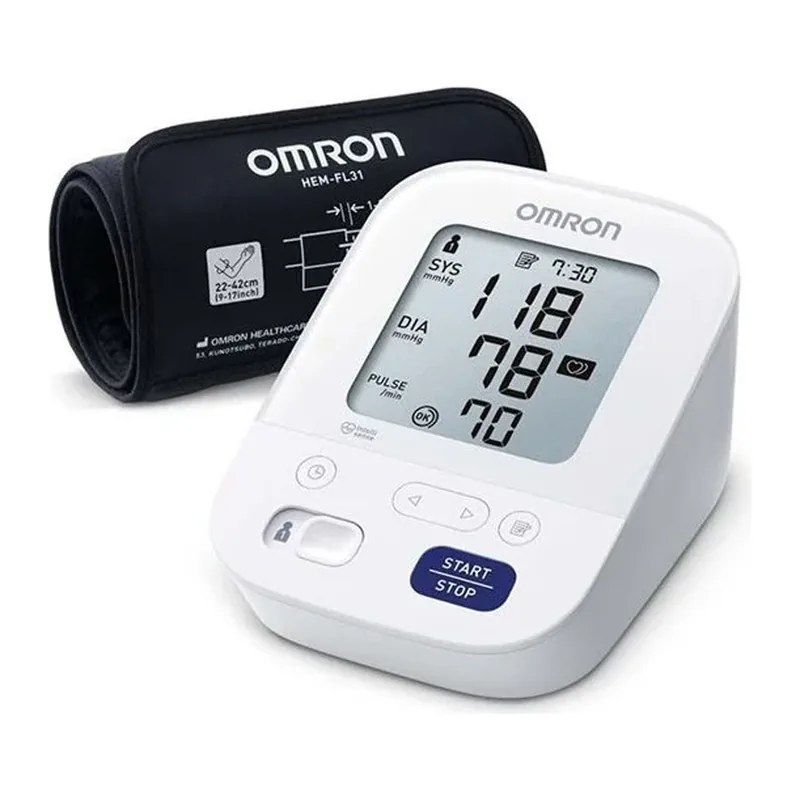
Omron Bronze Upper Arm Blood Pressure Monitor
I have used this product myself.
An upper-arm blood pressure monitor that sends every reading to a phone app over Bluetooth, for a dated record at appointments.
Key Features
- Wide-range D-ring cuff that fits upper arms from 9 to 17 inches
- Flags an irregular heartbeat detected while measuring. This is a prompt to raise it with a doctor, not a diagnosis, and it does not replace an ECG
- Keeps the last 14 readings on the unit, so nothing is lost if a phone is replaced or the app is never set up
- Pairs with the free OMRON connect app by Bluetooth to keep an unlimited log you can share with your doctor
- Runs on four AA batteries, included in the box
Best for
Seniors whose doctor has asked them to bring home readings to appointments, or anyone on blood pressure medication who wants to see whether a recent change is working
A practical gift for a parent recently diagnosed or newly on medication, when the alternative is them writing numbers on the back of an envelope and losing it.
Worth knowing
Cuff size matters more than most buyers expect — measure the upper arm circumference and match it to the cuff range before ordering, since a poorly fitting cuff produces confidently wrong numbers. Technique affects the reading more than the device does: sit still for five minutes first, feet flat, arm supported at heart height, and do not talk during the measurement. This is a monitoring tool, not a diagnostic one; never adjust medication on the basis of home readings without speaking to a doctor. Wrist monitors are more convenient but require the wrist held precisely at heart level to read correctly, which an upper-arm cuff removes as a variable.
I may earn a commission if you buy through this link, at no extra cost to you.
As an Amazon Associate I earn from qualifying purchases.
How this works
Are home blood pressure monitors accurate?
Omron is a Japanese electronics company that has been making these since the 1970s, and it is the name most people have already seen on the wall of a clinic. That recognition is worth something in itself: a household buying its first one is not being asked to trust an unfamiliar brand with a health measurement.
The unit is about the size of a paperback and lives comfortably on a bedside table or a shelf. There is a display, a start button, and very little else — no menus to navigate and nothing that changes shape after a software update.
One detail worth knowing before buying: the cuff is a consumable. The bladder inside perishes over several years of daily use, and a monitor that has quietly drifted looks exactly like one that has not. Replacement cuffs are sold separately and cost a fraction of a new unit, so the sensible assumption is that the machine outlasts the part wrapped around the arm.
Frequently Asked Questions
For tracking trends, yes — provided the cuff fits and the technique is consistent. Home readings are increasingly what clinicians ask for, because a single reading taken in a clinic can be raised by the setting itself. What home monitoring will not do is diagnose anything; it produces evidence for a doctor to interpret.
An upper-arm cuff removes a common source of error, because a wrist monitor only reads correctly when the wrist is held level with the heart. A wrist model is easier to put on one-handed and more comfortable for anyone who finds an inflating arm cuff unpleasant, so it can be the better choice where comfort determines whether the device gets used at all.
The same times each day, most commonly morning before medication and evening before bed. Sit quietly for five minutes beforehand, keep both feet flat, rest the arm at heart height, and do not talk during the measurement. Consistency matters more than the exact hour.
No. The monitor displays and stores readings on its own screen. The phone app adds a dated log that can be shown or sent to a doctor, which saves transcribing numbers by hand, but the device works without it.
Where this information comes from
These sources offer further reading. I identify claims from the maker as manufacturer claims in the page text.
- Home Blood Pressure Monitoring: American Heart Association
- Measuring Your Blood Pressure: CDC
- About High Blood Pressure: CDC
How does it compare?
Other options in this category worth considering.
| Product | Price | Best for |
|---|---|---|
| Omron Bronze Upper Arm Blood Pressure Monitor This pick | See Amazon | Seniors whose doctor has asked them to bring home readings to appointments, or anyone on blood pressure medication who wants to see whether a recent change is working | A practical gift for a parent recently diagnosed or newly on medication, when the alternative is them writing numbers on the back of an envelope and losing it. |
| Omron Gold Wireless Wrist Blood Pressure Monitor | See Amazon | Seniors who need a wrist monitor because an upper-arm cuff does not fit or is painful. Ask a clinician whether a wrist monitor is right for you. | A gift for a parent who cannot use an upper-arm cuff comfortably. Check with their clinician first. |
Prices are approximate ranges — check each retailer for today's price.
More in this category
Browse Blood Pressure MonitorsLast updated: .
Products on this page are not intended to diagnose, treat, cure, or prevent any medical condition. Content is for informational purposes only and is not a substitute for professional medical advice. Always consult your physician or a qualified healthcare provider before purchasing or using any health product.