
Original Medicare pays nothing toward them. The reasoning tells you exactly which alternative route is worth your time.
Original Medicare does not cover medical alert systems. Not the equipment, not the monitoring subscription, and not smartwatches with fall detection. If you are helping an older parent stay safe at home, this guide walks through where the cost can actually come from instead.
Why — and it's worth knowing why
Medical alert systems fail the durable-medical-equipment test on the same point that trips up most consumer safety products: equipment must be typically only useful to someone who is sick or injured. A button that calls for help is useful to anyone living alone, sick or not. So Medicare classifies these systems as convenience items.
That classification feels wrong given how much falls matter for older adults, and families are right to find it frustrating. But knowing the reasoning is genuinely useful — it tells you that arguing medical necessity won't work here. The exclusion applies no matter what. Your time is better spent on the alternatives below.
Here is how the four routes compare before we go through each one.
| Who pays | Covered? | What to know |
|---|---|---|
| Original Medicare | No | Classed as a convenience item, not durable medical equipment. The exclusion is categorical. |
| Medicare Advantage (Part C) | Sometimes | A partial allowance in some plans, often tied to one provider. Varies by plan and county — check the Evidence of Coverage. |
| Medicaid (PERS) | In many states | Covered as personal emergency response services, through Home and Community-Based Services waivers. Rules vary by state. |
| Pay privately | You pay | Where most families end up. Paying yearly is usually cheaper than paying monthly. |
Medicare Advantage
This is your best shot at getting help. Part C plans can offer extra benefits Original Medicare doesn't, and personal emergency response systems show up in some plans.
Where they do, the coverage is usually partial — a contribution or allowance, not the full cost — and often limited to one specific provider the plan works with. Availability varies by plan and county, and can change every year. Check the Evidence of Coverage for the current plan year before you assume anything.
Medicaid
For those who qualify, this is often the better answer. Medicaid calls these personal emergency response services, or PERS, and covers them in many states through Home and Community-Based Services waivers — programs built specifically to help people stay at home instead of moving into a care facility, which is exactly what an alert system is for.
Because these waivers are run state by state, the answer depends on where you live. Your local Area Agency on Aging can tell you what applies, at no cost.
Other ways to bring the cost down
Some Area Agencies on Aging run their own subsidized or loaned-equipment programs. Hospital discharge planners sometimes have short-term arrangements available after a fall-related hospital stay. Membership organizations and some insurers offer discounts. Paying yearly is usually cheaper than paying monthly, but it locks you in before you know whether your parent will actually wear the device — and that's the real risk, more than the price.
What to check before buying privately
Since most families end up paying for this themselves, here are the practical questions worth asking. Is the monitoring center staffed 24/7 and based in the US? Does the range cover the whole home and yard, or just part of it? Is fall detection automatic, and how often does it false-alarm in real use? What's the battery life, and what happens during a power outage? Is there a contract, and what happens to it if a parent moves into a care facility?
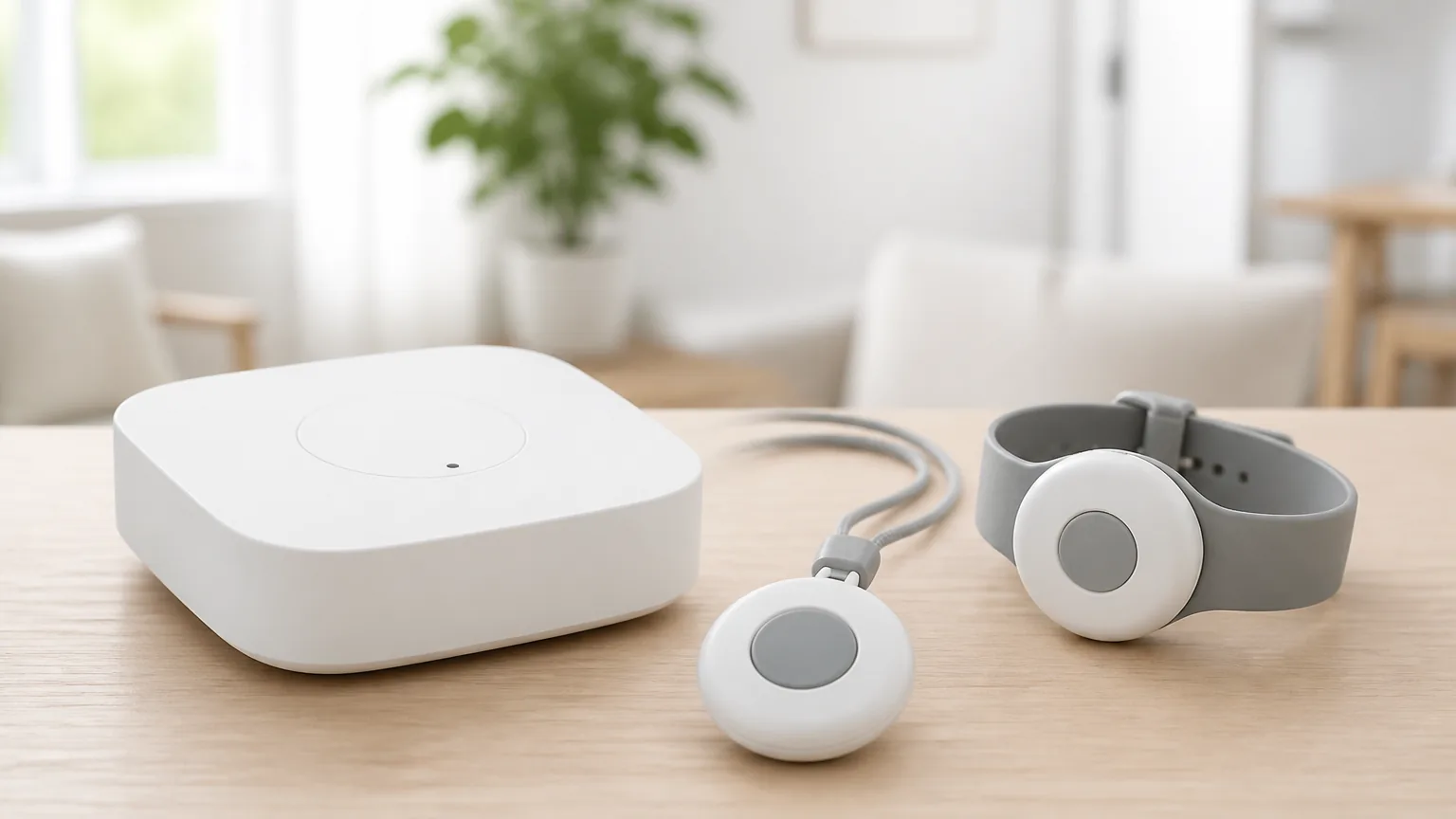
And the one question that matters more than any of the others: will they actually wear it? A pendant sitting in a drawer helps no one. People who dislike the look of a traditional pendant tend to wear a wrist- or watch-style device more consistently — and that alone matters more than most feature comparisons.
To bring the cost of a medical alert system down, work through these in order:
- Expect Original Medicare not to cover it, since it is not classed as durable medical equipment.
- Check the parent's Medicare Advantage plan for a supplemental benefit that may include one.
- Ask the state Medicaid program, or its waiver, about personal emergency response coverage.
- Choose a device the person will actually wear every day, since one left in a drawer helps no one.
Key Takeaways
- Original Medicare pays nothing toward a medical alert system — not the equipment, the monitoring, or a fall-detection watch.
- The reason is a rule, not a judgment call: these count as convenience items, so arguing medical need will not change it.
- A Medicare Advantage plan may cover part of the cost. It varies by plan and county, so check the plan's Evidence of Coverage.
- Medicaid covers these in many states as personal emergency response services, through Home and Community-Based Services waivers.
- If you pay privately, the deciding question is not price. It is whether the person will actually wear the device.
This article is part of a series. For the framework behind all of these answers, see Does Medicare Cover Assistive Devices? What Families Need to Know.
Sources
- Medicare.gov — Durable medical equipment (DME) coverage
- Medicare.gov — What Medicare health plans cover
- Eldercare Locator (ACL) — find your local Area Agency on Aging
Coverage depends on your specific plan, your documented medical need, and your supplier. To confirm anything that matters to you: call Medicare on 1-800-MEDICARE, check your plan's Evidence of Coverage, or contact your State Health Insurance Assistance Program (SHIP), which provides free one-to-one counseling in every state.