
The luxury hotel industry is paying more attention to what older guests need. Here's what separates the genuinely excellent from the merely adequate.
The luxury hotel industry's attention to what older guests need has improved significantly in recent years — driven partly by demographic reality (Americans age 50 and older now spend more than $236 billion a year on leisure travel, according to AARP) and partly by a genuine shift in design philosophy. But the quality of execution varies considerably, and the distinction between a hotel that has added accessibility features and one that has genuinely thought about older guests' experience is meaningful. The need is widespread: about 2 in 5 adults age 65 and older have a disability, according to the Centers for Disease Control and Prevention.
Physical design: what good looks like
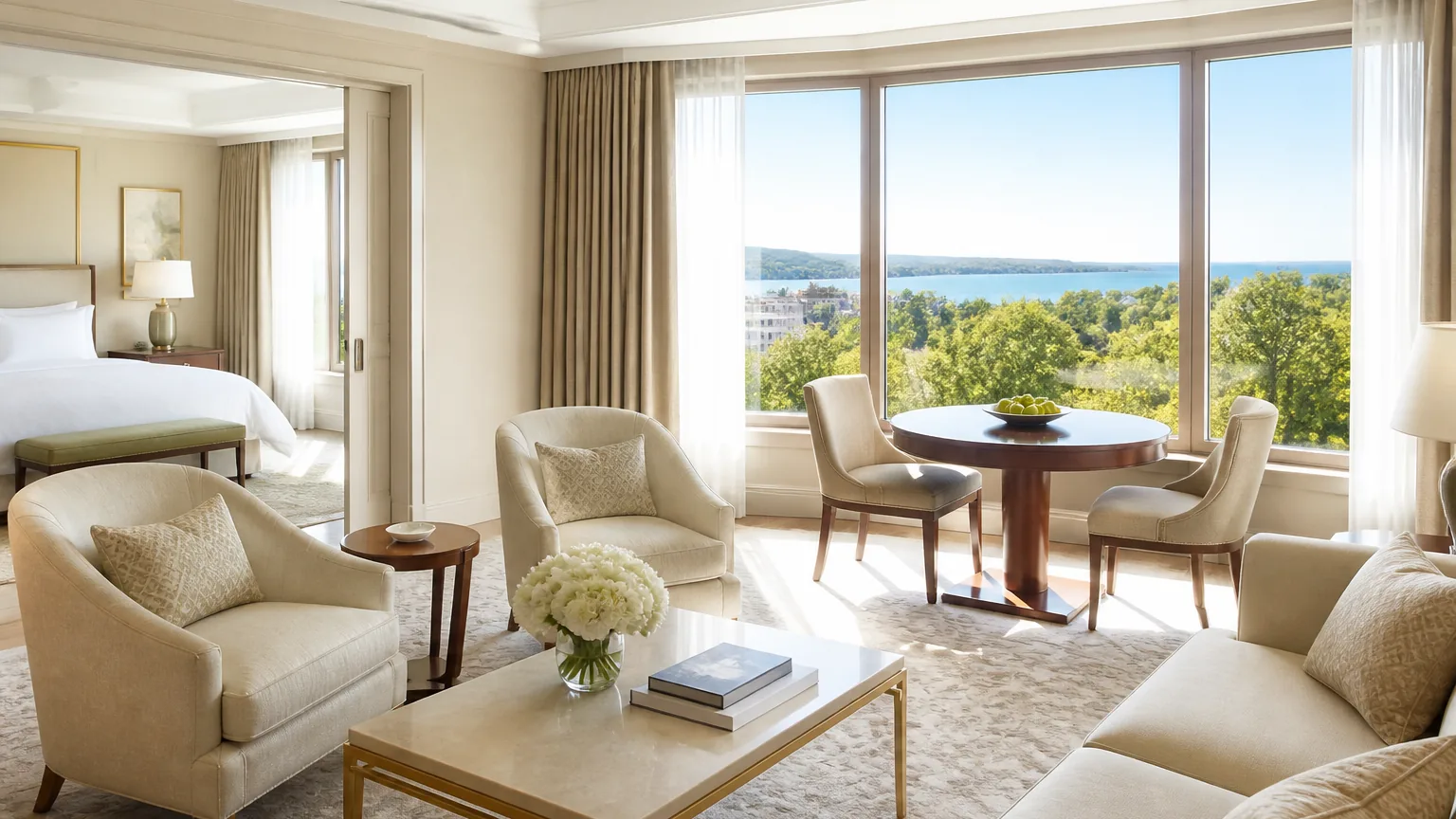
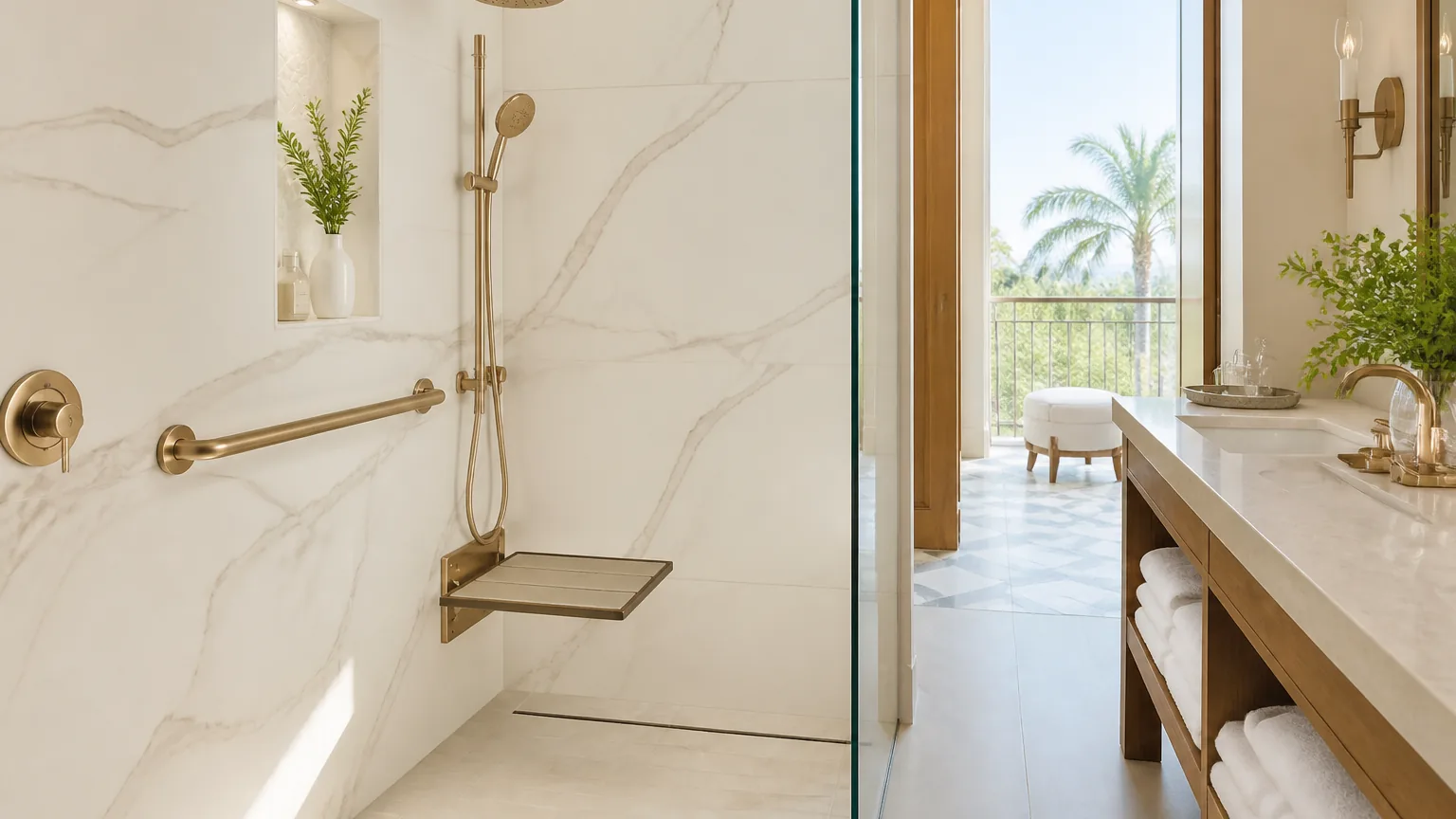
Walk-in showers with hand-held attachments and properly installed grab bars are the baseline. What distinguishes better properties is how these are integrated: grab bars that look like intentional design elements rather than clinical modifications, shower seats that fold away when not needed, threshold-free entries that feel architectural rather than accessible. Room lighting — adequate for reading without requiring specific lamp placement, well-lit bathroom mirrors, and a clear path from bed to bathroom at night — is a detail that excellent properties treat as a design priority.
Mattress quality tends to be uniformly high at the luxury level, with the addition of firm options increasingly available on request. Ergonomic desk chairs and reading chairs with proper lumbar support represent thoughtful provision rather than decoration. Electrical outlets at desk height (rather than floor level) and easily accessible USB ports are details that sound minor and make a consistent daily difference.
The service dimension
The physical elements are necessary but not sufficient. The aspect that most reliably distinguishes excellent hotels in this context is the quality of the concierge and front-of-house team's understanding of what older guests actually need — and their initiative in providing it rather than waiting to be asked.
A concierge who knows which local restaurants have step-free access and quieter tables, who arranges private cars rather than hailing taxis, who can advise on the walking distances involved in specific sites and suggest alternatives for those who'd find them difficult, who follows up on any special requests from the previous day — this is what separates excellent from adequate at this price point. The Four Seasons consistently trains its concierge staff in this direction; Rosewood properties and Belmond trains are similarly cited by experienced older travelers as setting a high standard.
Communicating needs at booking
The single approach that most consistently improves hotel stays for older travelers is communicating specific requirements at the time of booking rather than on arrival. Most luxury properties can accommodate almost any reasonable request that is made in advance — room on a lower floor, firmer mattress, bathrobe available on first night, dietary requirements noted for restaurant reservations. Last-minute requests are harder to fulfill well because they depend on what's available, rather than what's been prepared.
Collections worth knowing about include Relais & Châteaux (typically smaller, more personal properties with higher staff-to-guest ratios), Leading Hotels of the World, and Small Luxury
Hotels of the World — all three tend to index toward the kinds of properties that suit older travelers better than large, convention-oriented hotels.
What to look for when booking
The most reliable indicators of a hotel that will suit older guests well are: membership in one of the above collections, strong recent reviews specifically mentioning service quality (rather than just facility quality), a concierge team with specific local expertise (rather than a generic information desk), and — where relevant — independent accessibility reviews from sources like Sage Traveling or Mobility International USA, which assess European hotels specifically for older and disabled travelers.
| Area | What the best hotels get right |
|---|---|
| Room design | Step-free showers, grab bars, good lighting, lever handles |
| Getting around | Elevators, short level routes, and seating in the lobby |
| Service | Staff who anticipate needs without being asked |
| Booking | Clear channels to state needs in advance |
To book well, work in this order:
- Decide the must-haves: a step-free bathroom, elevator access, a quiet floor.
- State those needs at booking, in writing, not on arrival.
- Confirm the specifics with the hotel directly, since websites overpromise.
- Consider a specialist service that vets hotels for older travelers.
Key Takeaways
- The gap between a hotel that added accessibility features and one that truly considered older guests is real and worth spotting.
- Good physical design integrates grab bars, fold-away shower seats, and threshold-free entries so they read as design, with light for reading and a clear path to the bathroom.
- Service is the real differentiator: a concierge who anticipates needs — step-free restaurants, private cars, realistic walking distances — separates excellent from adequate.
- State specific needs at booking, not on arrival, since most luxury properties can prepare almost any reasonable request in advance.
- Smaller collections like Relais & Châteaux, Leading Hotels of the World, and Small Luxury Hotels tend to suit older travelers better than large convention hotels.