
Distance makes everything harder — the worry, the guilt, the practical support. Here's what actually helps.
Living far from an aging parent produces a specific kind of worry. Not the constant, manageable kind that comes with being nearby. It is the deeper, background hum of not knowing. Not knowing what the day-to-day really looks like. Not knowing whether the reassurances on the phone reflect the actual situation. Not knowing what you'd do if something went wrong. The stakes are not only emotional: the Centers for Disease Control and Prevention links social isolation to higher risks of heart disease, dementia, and depression, and notes that older adults are more at risk of it.
Distance doesn't make care impossible, but it does require more deliberate structures than geographic closeness allows. The families who manage it well tend to have thought about it systematically rather than just hoping it works out.
This situation is common. Roughly 12% of US caregivers are supporting an older relative or friend who lives at least an hour away, according to a peer-reviewed study hosted by the NIH's National Library of Medicine, drawing on National Alliance for Caregiving and AARP survey data.
Communication that goes deeper than check-ins
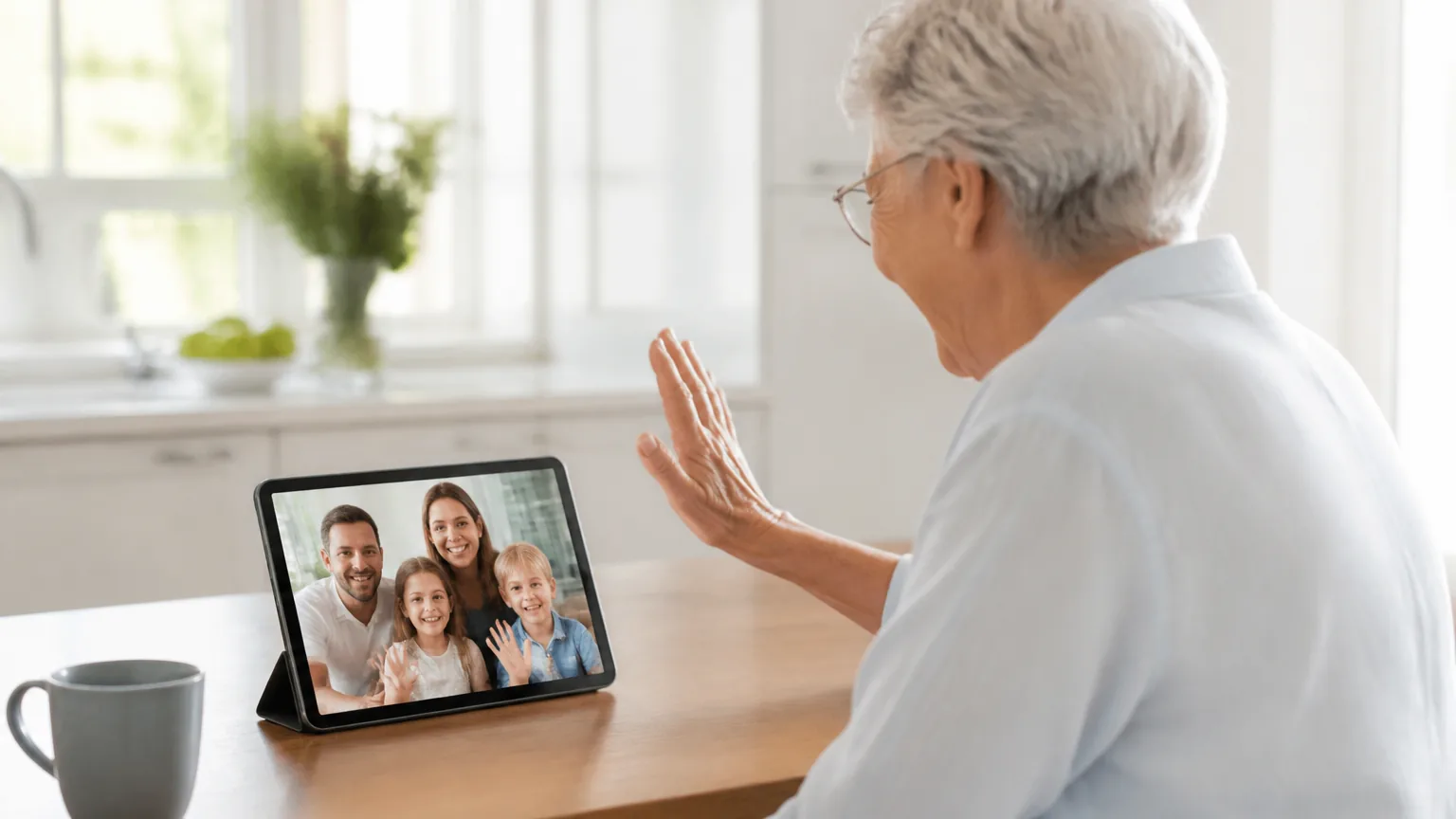
Regular phone calls are the baseline, but they have limits. Phone calls are easy to keep surface-level, and they tell you relatively little about how someone is physically or emotionally doing. Video calling, when it's working well, adds meaningful information — you can see whether someone looks well, whether their living environment looks as it should, whether their affect and energy seem normal.
A regular, expected time for video calls tends to work better than ad hoc contact. A call that happens every Sunday morning at the same time becomes a fixture of the week rather than an effort to coordinate. The predictability is calming for everyone.
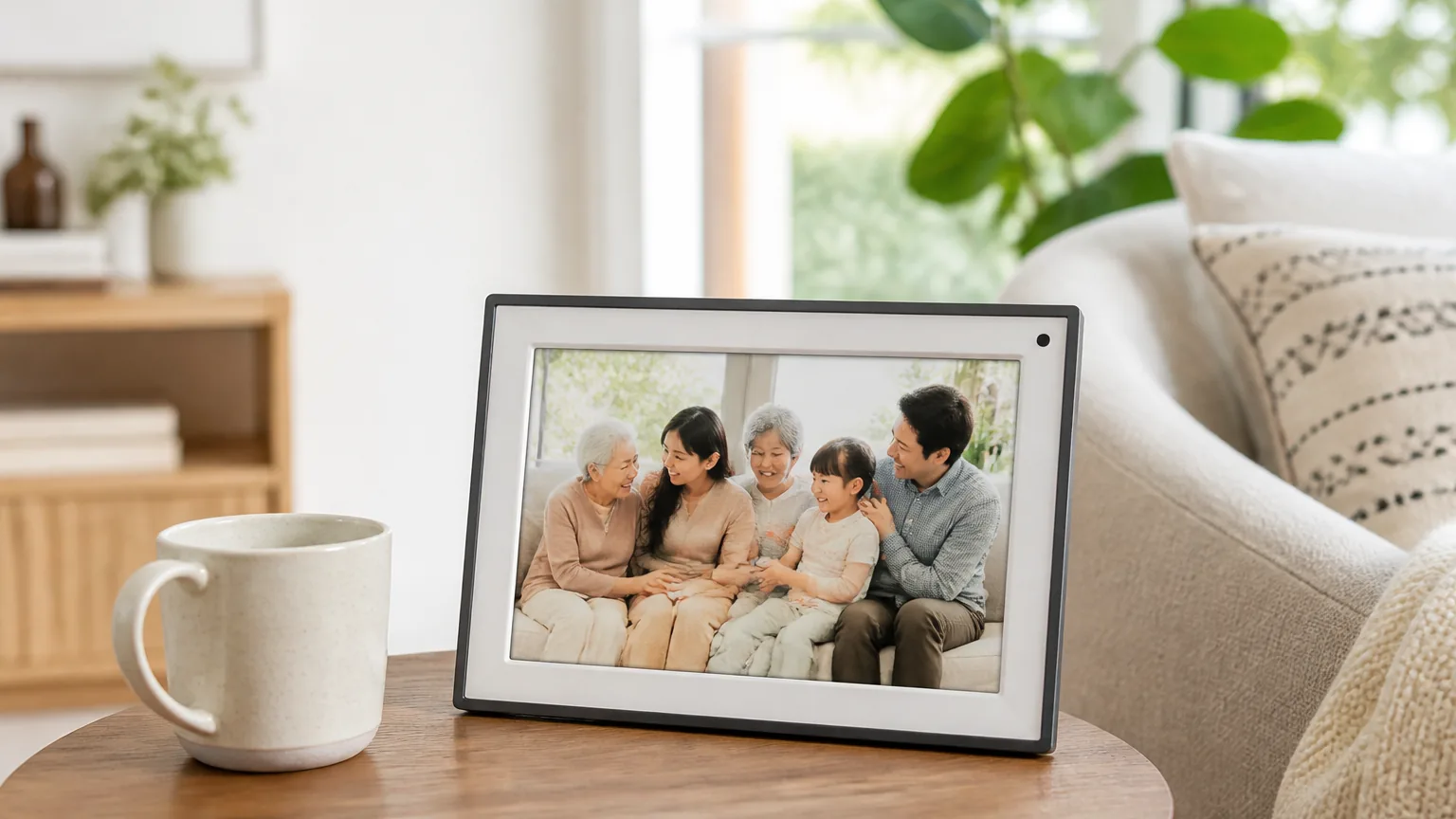
Regular photograph sharing in both directions helps maintain connection between calls. Services that allow multiple family members to contribute to a shared photo feed — and that display those photos on a simple device in the senior's home — create a continuous thread of connection that supplements conversations. Being able to look at recent photos of grandchildren, shared meals, or everyday moments throughout the week keeps the relationship alive between calls.
Building a local network
Distance means the visiting family member cannot be the primary source of daily support, and trying to manage everything remotely is unsustainable. One of the most valuable things you can do from a distance is help build a local network. That network can provide what geography prevents you from providing yourself.
This usually means knowing the neighbors. Exchange contact details, and build a genuine relationship. Then reaching out with a concern feels natural rather than awkward. It means knowing the Primary Care Physician (PCP), the local pharmacy, the regular contacts. It means having at least one or two local people who could provide a physical presence if the situation required it.
Establishing paid in-home help while things are still going relatively well is considerably easier than arranging it under crisis conditions. Someone who comes for a few hours a week can provide regular eyes on the situation. Frame it at first as help with shopping or cleaning rather than personal care. It also builds a relationship of trust that will matter if needs increase.
Remote monitoring
Technology for remote monitoring has become significantly more practical and less intrusive than it was even five years ago. Medical alert systems with GPS tracking allow a senior to call for help anywhere and give family members some assurance that help is accessible. Some systems include fall detection that contacts emergency services automatically if a fall is detected and the wearer doesn't respond.
Smart home sensors can track patterns of movement and activity, without cameras. They alert family members if those patterns change sharply. That change can signal illness or a problem before it becomes a crisis. These systems work best when they are chosen together rather than imposed. Have a talk about privacy and consent before any monitoring system goes in.
| Way to stay connected | What it gives you | Keep in mind |
|---|---|---|
| Regular phone calls | The baseline contact | Easy to keep surface-level; tells you little about how a parent is really doing. |
| Scheduled video calls | A look at how a parent seems, moves, and whether the home looks right | Works best at a fixed, expected time, such as the same morning each week. |
| Shared photo frame or feed | A continuous thread between calls that several relatives can add to | Supplements conversations; it does not replace seeing or hearing a parent. |
| A local network (neighbors, doctor, pharmacy, paid help) | A physical presence you cannot provide from far away | Build it while things are going well; arranging help mid-crisis is much harder. |
| Medical alert with GPS and fall detection | A way to call for help anywhere, with some systems alerting automatically after a fall | Choose it together; coverage is covered in the medical alert article. |
| Smart home sensors | An early flag when daily activity changes sharply, without cameras | Settle privacy and consent first, and pick the system together. |
Visiting well
When a visit is possible, using the time with attention makes a difference. The state of the home, the fridge, how a parent is moving and getting by. These are things you can only judge in person. Practical tasks that accumulate over time — maintenance, shopping, administrative tasks that have been deferred — are meaningful uses of in-person time.
And time that isn't task-oriented matters just as much. The connection that comes from simply being together matters too. Cooking a meal, watching something, talking without an agenda. It sustains the relationship in ways that are hard to match from a distance.
Distance is hard. But it doesn't prevent real care. It just requires more intention.
To stay close from far away, focus in this order:
- Set up easy video calls, so contact goes deeper than a quick check-in.
- Build a local network: a neighbor, a friend, or a nearby relative who can drop by.
- Consider remote monitoring for safety, with the parent's agreement.
- Make visits count by handling the things that are hard to do from a distance.
Key Takeaways
- Distance does not prevent real care, but it needs more deliberate structure than living nearby does.
- Scheduled video calls tell you more than phone check-ins, since you can see how a parent looks and whether the home looks right.
- Build a local network — neighbors, the doctor, a pharmacy, a few hours of paid help — while things are calm, because arranging it in a crisis is much harder.
- Remote monitoring, from a medical alert with GPS to camera-free activity sensors, can flag trouble early, but choose it together and settle privacy first.
- Use in-person visits for the things only presence reveals, and for the unhurried time that sustains the relationship.