
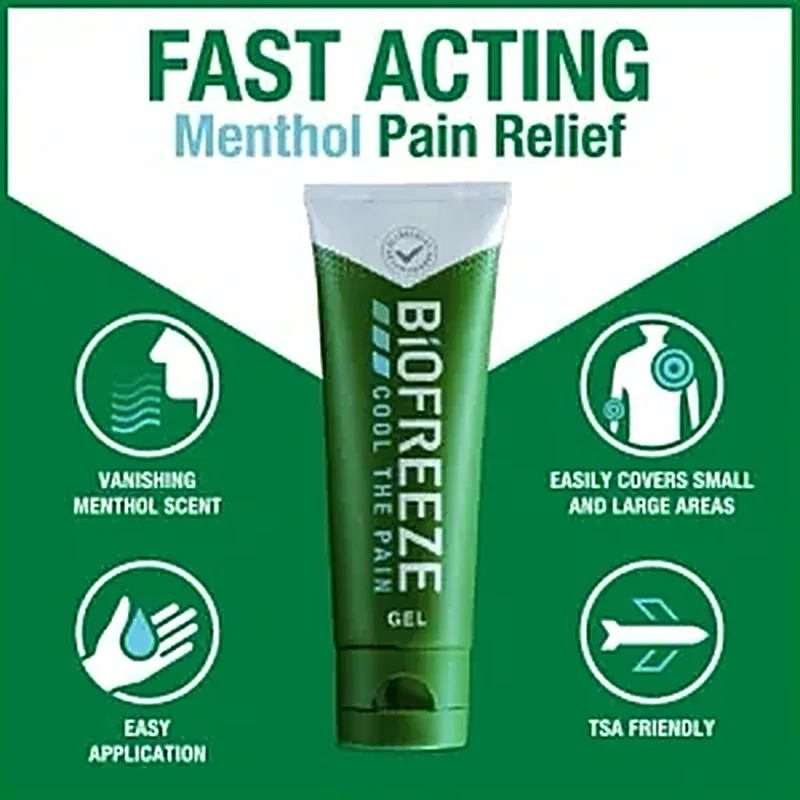
Biofreeze Pain Relief Gel
Menthol-based topical gel that cools arthritis and muscle pain at the source, available without a prescription.
Key features
- Sold as a gel, a roll-on, a spray, and a patch — the roll-on and spray need no rubbing in, which matters when hands are stiff
- Dries in a minute or two with no oily residue, so it does not mark clothing or bedding
- Contains no aspirin, ibuprofen, or other NSAID, so it carries none of the stomach-bleeding cautions attached to oral pain relievers
Best for
Seniors who have one or two places that reliably ache — a knee, a shoulder, a lower back — and want something to reach for during the day. | An inexpensive, practical gift that actually gets used: most older adults have a spot that hurts, and this lives in a handbag or a bedside drawer without ceremony.
Worth knowing
Keep away from the eyes and broken skin, and wash hands after applying unless using the roll-on. The cooling sensation is strong at first and can feel uncomfortable on thin or sensitive skin. Relief is temporary and lasts a couple of hours, so this manages discomfort rather than treating what causes it. Do not use it under a heating pad or a tight bandage.
Where to buy