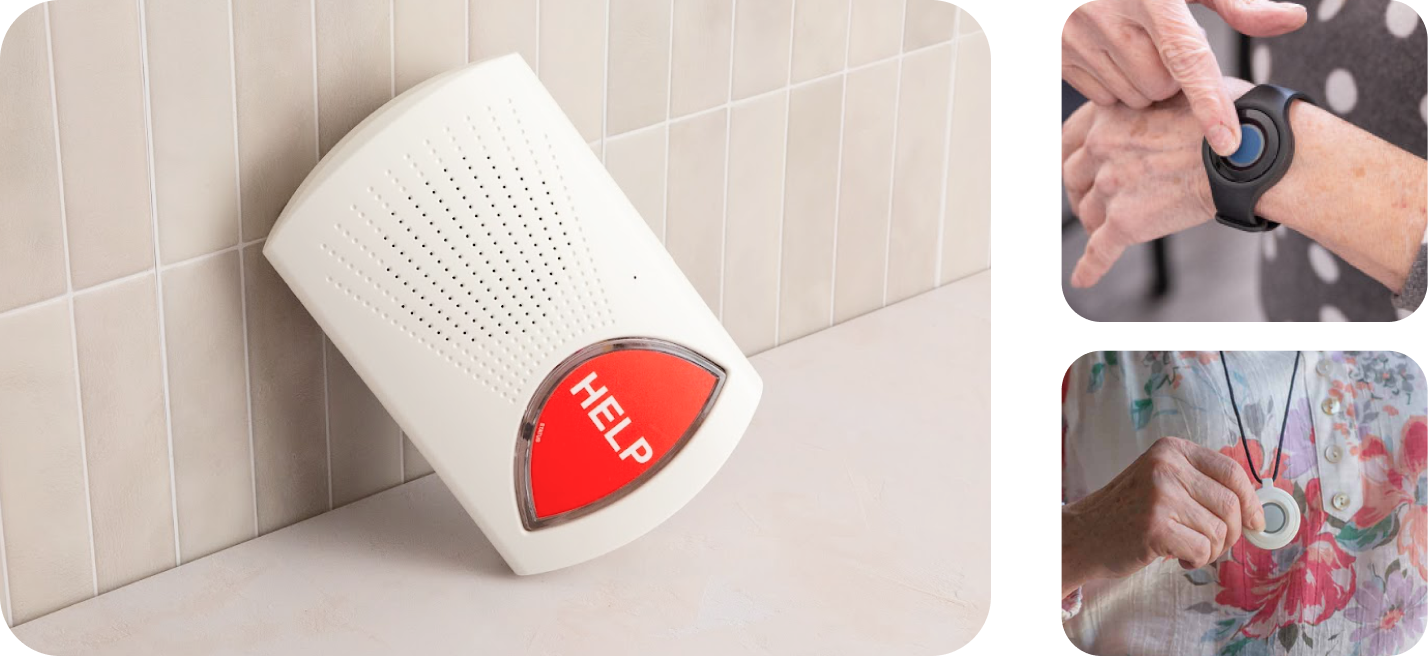
Personal emergency response systems that provide peace of mind at home and on the go.
Wearable Medical Alert Devices: Pendants, Wristbands & Bracelets
Medical alert systems are month-to-month with no long-term contract, starting around $29.95/month. Original Medicare does not cover the monthly fee, but some Medicare Advantage plans include it as a supplemental benefit — check your specific plan.
"Wearable" medical alert devices come in a few common formats — a neck pendant, a wristband, or a bracelet-style design — chosen for what the wearer will actually keep on, not just what looks least medical. Both systems below are pendant/wristband-style; check each product's details for the exact format before ordering.
24/7 emergency monitoring with a waterproof wearable button. Press for help — a live EMT-certified agent responds immediately. Landline or cellular. No contracts, price locked in.
Key features
24/7 monitoring by EMT/EMD-certified agents — press the button, get help immediately
Shower-safe wearable button with up to 1,000 ft range from base; batteries last up to 7 years
Optional automatic fall detection (AutoFALL), works on landline or 4G LTE cellular — no Wi-Fi needed
Best for
Seniors living independently at home who want a reliable emergency lifeline — especially those who live alone, have a fall risk, or whose family lives far away.
Worth knowing
Monthly subscription required (starting at $29.95/mo). Fall detection add-on is $10/month extra and does not detect 100% of falls. GPS version needed if the senior leaves home regularly.
Both systems below are month-to-month with no long-term contract — neither locks you into an annual plan. Here's how they compare on contract terms and cost:
Product
Contract required?
Monthly fee?
Bay Alarm Medical
No long-term contract
Monthly subscription
Medical Care Alert
No long-term contract
Monthly subscription, starting at $29.95/mo
Does Medicare Cover Medical Alert Systems?
Standard Medicare does not cover monthly medical alert subscription costs. Some Medicare Advantage plans include medical alert devices as a supplemental benefit — check your specific plan. FSA and HSA funds can be used to pay for qualifying medical alert systems. Veterans may qualify for coverage through VA programs.
Frequently Asked Questions
Medical alert systems include a wearable button (pendant or wristband) connected to a monitoring center. When pressed, the device opens a two-way voice connection with a trained operator who can send emergency services, notify family members, or provide assistance. GPS-enabled mobile devices work outside the home. Fall detection models automatically alert the center if a fall is detected without the button being pressed.
In-home systems cover the home and yard — they stop working beyond a few hundred feet from the base. Mobile systems use GPS and cellular networks and work anywhere with cell coverage, making them appropriate for active seniors who drive, exercise outdoors, or travel. Mobile systems cost more per month.
Standard Medicare does not cover monthly medical alert subscription costs. Some Medicare Advantage plans include medical alert devices as a supplemental benefit — check your specific plan. FSA and HSA funds can be used to pay for qualifying medical alert systems. Veterans may qualify for coverage through VA programs.
Key factors: monitoring center response time, contract terms (month-to-month preferred over long contracts), equipment quality and battery life, whether fall detection is available and included or extra cost, cancellation and return policy, and the company's Better Business Bureau rating.